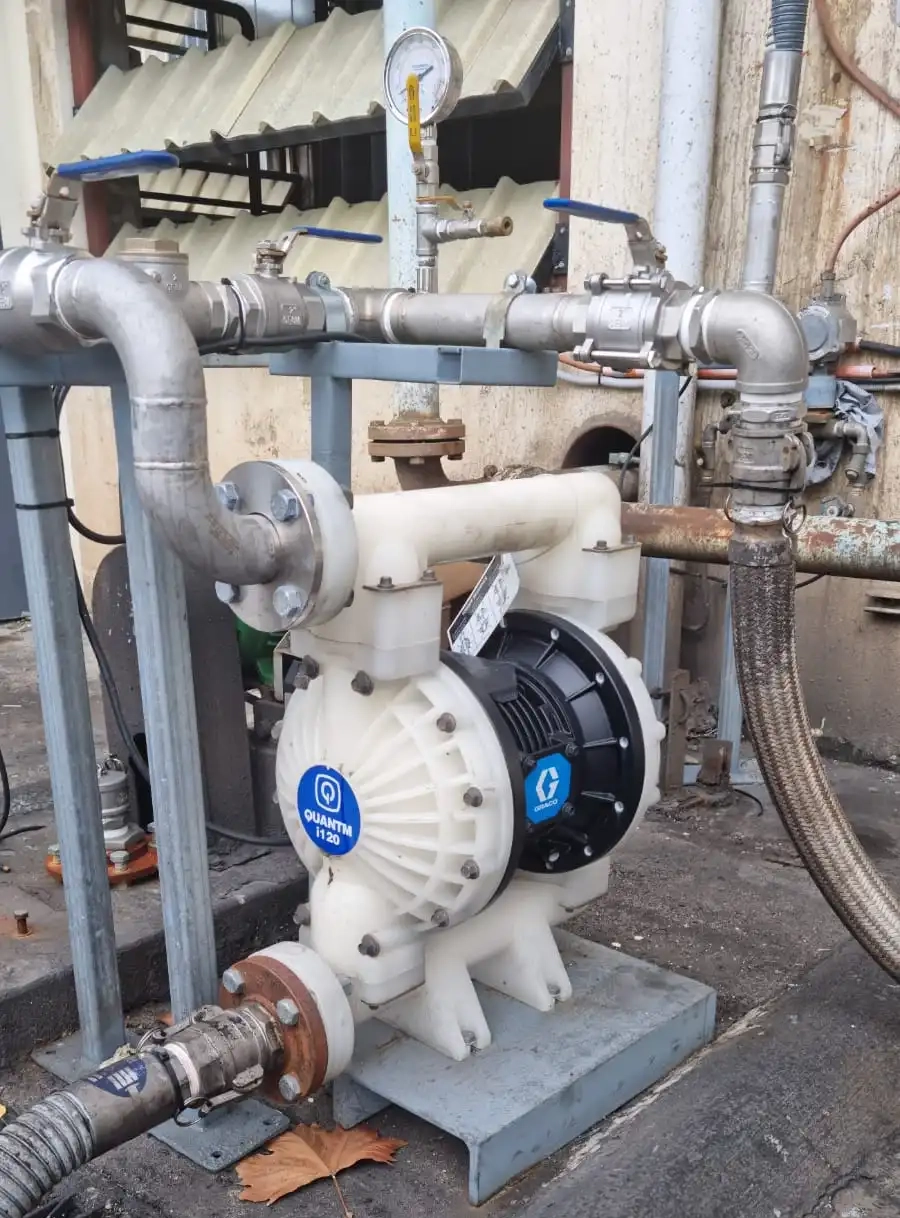
Leaks in pneumatic pumps can be caused by wear, improper installation and excessive pressure. To prevent and correct leaks, it is essential to perform regular maintenance, use quality components and train staff appropriately.
**Leaks in pneumatic pumps** can cause serious operational and financial problems. Understanding the causes and solutions for this type of failure is essential. In this article, we will discuss how to effectively identify these leaks and offer practical tips to resolve them and prevent them from becoming a nightmare for your company.
Main causes of leaks in pneumatic pumps
Os leaks in pneumatic pumps can occur for a variety of reasons, and understanding these causes is crucial for proper equipment maintenance. Below are some of the main causes that can lead to leaks:
1. Component Wear
Over time, the internal components of pneumatic pumps, such as diaphragms and seals, can wear out. This wear and tear can result in seals failing, allowing air or fluid to escape.
2. Incorrect Installation
Improper installation of the bomba It can cause excessive stress on its parts, leading to leaks. It is important to follow the manufacturer's specifications and ensure that all connections are tight and secure.
3. Fluid Contamination
Contaminated fluids can damage seals and other pump components. The presence of solid particles or aggressive chemical substances can compromise the integrity of the equipment.
4. Excessive Pressure
Operating the pump at pressures higher than recommended may cause seals and other components to fail, resulting in leaks. It is essential to monitor the operating pressure and adjust it as necessary.
How to identify leaks in pneumatic pumps
Identify leaks in pneumatic pumps is essential to ensure the efficiency and safety of the system. Below are some techniques and tips that can help with leak detection:
1. Visual Inspection
Carrying out a regular visual inspection is one of the simplest ways to identify leaks. Look for signs of moisture, stains or debris buildup around the pump and connections.
2. Use of Leak Detectors
There are specific devices, such as ultrasonic leak detectors, that can help identify leaks that are not visible to the naked eye. These devices capture high-frequency sounds generated by escaping air.
3. Pressure Tests
Performing pressure tests can help identify whether the pump is operating within normal parameters. If the pressure drops below what is expected, it could indicate a leak.
4. Performance monitoring
Monitoring pump performance, such as flow efficiency and pressure, can help detect leaks. A drop in efficiency can be a sign that something is not working properly.
Effective solutions for pneumatic pump leaks
to solve leaks in pneumatic pumps, it is essential to adopt effective solutions that guarantee the integrity of the system. Below are some approaches that can be implemented:
1. Replacement of Damaged Components
When a leak is identified, the first action should be to replace damaged components such as seals and diaphragms. Using high-quality replacement parts is crucial to avoid future problems.
2. Connection Adjustment
Check all pump connections and adjust as necessary. Loose connections can be a common source of leaks. Use appropriate tools to ensure that all parts are securely connected.
3. Use of Sealants
In some cases, applying appropriate sealants can help seal small cracks or gaps in connections. Be sure to choose a sealant that is compatible with the fluids used in the pump.
4. Preventive Maintenance
Implementing a preventive maintenance program can help identify and fix problems before they become leaks. Regularly inspect pumps and perform necessary maintenance to ensure optimal operation.
Preventing leaks in pneumatic systems
A preventing leaks in pneumatic systems is fundamental to ensuring operational efficiency and safety. Here are some best practices for preventing leaks:
1. Regular Maintenance
Performing regular maintenance is essential to identify and fix problems before they become leaks. Inspect components such as seals, hoses and connections periodically.
2. Team Training
Training staff on how pneumatic systems work and the importance of maintenance can help prevent errors that lead to leaks. Well-trained personnel can identify signs of problems quickly.
3. Use of Quality Components
Investing in high-quality components compatible with the pneumatic system is crucial. Low quality parts can fail more quickly and cause leaks.
4. Continuous Monitoring
Implementing continuous monitoring systems can help detect leaks in real time. Pressure and flow sensors can alert you to anomalies before they become serious problems.
Conclusion on Leaks in Pneumatic Pumps
Leaks in pneumatic pumps can cause serious operational and financial problems. Identifying the causes and implementing effective solutions is essential to maintaining system efficiency.
Additionally, prevention is key to avoiding leaks. Regular maintenance, team training and use of quality components are practices that help ensure the proper functioning of pneumatic systems.
With the correct strategies, it is possible to minimize the risk of leaks and ensure the safety and efficiency of operations.
FAQ – Frequently asked questions about leaks in pneumatic pumps
What are the main causes of leaks in pneumatic pumps?
The main causes include component wear, incorrect installation, fluid contamination and excessive pressure.
How can I identify leaks in pneumatic pumps?
Identification can be made through visual inspection, use of leak detectors, pressure testing and performance monitoring.
What solutions are effective for fixing pneumatic pump leaks?
Solutions include replacing damaged components, adjusting connections, using sealants and preventive maintenance.
How can I prevent leaks in pneumatic systems?
Prevention involves regular maintenance, staff training, use of quality components and continuous monitoring.
How important is regular maintenance on pneumatic pumps?
Regular maintenance helps identify problems before they become leaks, ensuring system efficiency and safety.
What should I do if I find a leak in a pneumatic pump?
If you find a leak, it is important to shut down the system, identify the cause, and make any necessary repairs immediately.