Pneumatic pumps
Pneumatic pumps are among the most used and versatile items within industries. Because of a simple, versatile technology and low maintenance, pneumatic pumps are easily used in segments ranging from
food and beverage production to mining.
Pneumatic pumps can withstand the most aggressive fluids in the most difficult environments, always producing at high speed, all thanks to their combination of components.
The secret is to know the basic components:
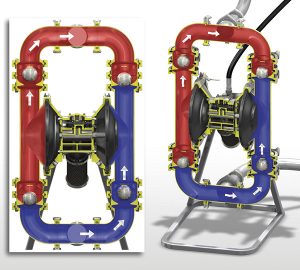
Know the basic fundamentals of a bomba pneumatics, will help you in several ways. Including making choices that will make your pneumatic pump perform better in a specific application:
Pneumatic pumps can withstand a large range of chemicals, flow rates and viscosities, and easily adapt to the most varied industrial segments.
The secret is to understand what your real need for production is to choose a pneumatic pump with the right components for your segment.
By selecting a pump for a specific application, certain components can make a big difference in the performance and interval between failures.
Fluid components
-Fluid suction/discharge collector/
- It is bolted or fixed to the external cameras to create a seal and a flow path for the Fluid Follow.
- Sealing valves make a sealing without leakage between the collectors and the outer fluid chamber, also houses the valve spheres in the sphere cages within the collectors.
The external fluid chamber
- It's part of the fluid path inside the pump.
- It is attached and sealed in the suction and discharge collectors by the sealing headquarters and/or valves (seat, valve, sealing rings) is also forbidden between the inner chamber/air chamber with the diaphragm cord.
- It creates an emptiness where alternative diaphragms pull the fluid and push it out on each side to create the pumping action.
Os diafragmas
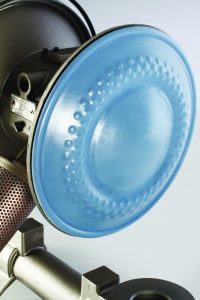
- They act like a barrier that separates the side of the fluid from the pump from the air side.
- Diaphragms (in their standard model) demands a sealing at two points:
1) In the center of the opening of the diaphragm, squeezing the internal and external plates of the diaphragm on the main axis, capturing the diaphragm. When tight properly, a leakless seal is created.
2) Sealing also happens in the external circumference of the diaphragm, usually in the molded sealing cord or sealing grooves in the internal air chamber and/or external fluid chamber. The seal occurs from the compression created when the outer chamber screws (aparafused bombs) or the clamp sets (clamp style pumps) are tight.
- Some PTFE Diaphragm projects incorporate (on the mold) the internal and external diaphragm plates, so that no central hole is present. These linked diaphragms do not require separate diaphragm plates and can simply be tight on the threaded diaphragm axis. This model is the favorite choice for many dangerous chemical applications.
- Diaphragms are dynamic components that are triggered when air pressure is supplied behind the auxiliary side diaphragm. Modulated air pressure exerts strength on the air side of the diaphragms, which in turn exerts the same force for fluid being pumped.
- Diaphragms come in a variety of materials and models to meet specific application needs, such as chemical compatibility, temperature, abrasion resistance and certification requirements. For more details, consult the manufacturer.
Click here, and learn more about how to increase Diaphragm Life of the pneumatic pump.
The internal/external diaphragm plates
- They work in conjunction with the diaphragms to separate the side of the fluids from the pump from the air side.
- The plates are threaded on the main axis and diaphragm rod, compressing the diaphragms and creating a hermetic seal and a tight seal.
- The diaphragm plates support the diaphragms as the axis is corresponded, causing them to create a vacuum in the fluid, pulling the liquid to the fluid cameras and then pushing out.
Sets of staples or screws
- are used to group the pump components; The pumps come in a fixed or bolted style.
- In conjunction with the diaphragms and the headquarters of the valves, they create a seal that keeps the fluid in the pumps and separates the air side from the fluid side.
Main diaphragm axis
- Connects the sets of the diaphragm (internal / external plates and diaphragms).
- Threaded axes can be male or female and can connect to external plates through these threads.
Internal Chamber / Air Chamber
- maintains a sealing with diaphragms when compressed air is introduced on each side alternately. This exerts pressure on the back of the diaphragms, which exert pressure on the fluid.
AR VALVE
- directs the compressed air to one of the two aircraft in order to move the set of the diaphragm/rod. At the same time, the air valve is leading the air of the opposite air chamber, allowing its exhaustion to the atmosphere, through the exhaust door of the intermediate/central block.
The central intermediate block
- Usually guides the main axis/rod of the diaphragm with seals and bushings. The main shaft or pilot shaft (depending on the manufacturer model), delivers alternating pressure to the air valve to move the main valve coil - this causes the pump to alternate and create the pumping action. Air, in most cases, is also exhausted from the intermediate block through the exhaust door and outside the silencer of air exhaust.
Silencer of air exhaust
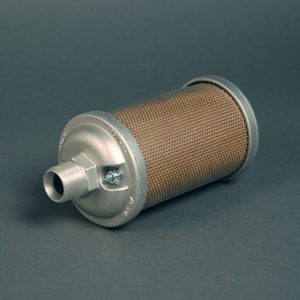
- Minimizes the sound of pump air exhaust; They are available in various types, materials and sizes. The silencer can also be removed so that the exhaust can be removed from the pump, allowing the pump to be submerged or simply expel the air to a safe or external place to further reduce the noise in the workplace.
Why understand how pneumatic pumps work?
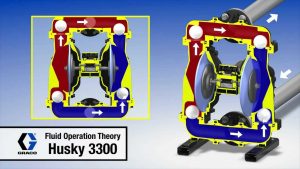
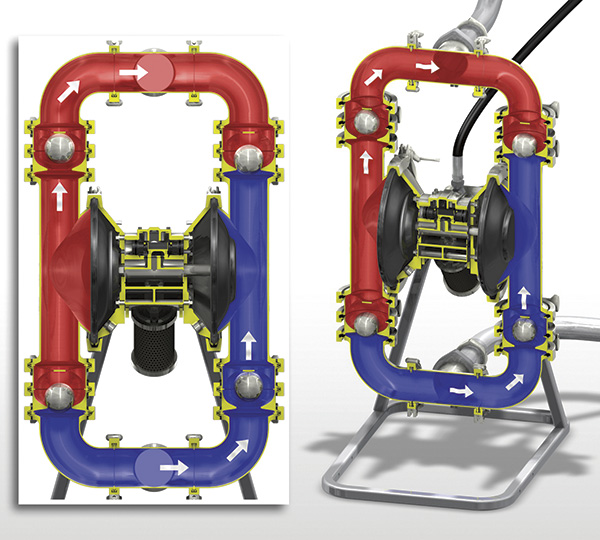
In addition to understanding what are the basic components that make up the pneumatic pump operating system, it is important to know how they operate. Check below:
Suction cycle
Compressed air fills the left inner camera, causing the opposite diaphragm to create suction, lifting the lower valve sphere to pull the fluid into the input. At the same time, the left fluid chamber is in the discharge cycle.
Download cycle
Compressed air fills the right inner chamber, causing the upper valve sphere to open and discharge the fluid. At the same time, the left camera is in the suction cycle.
As valve spheres
Tip: Heavy valve spheres should be used to pump thick and viscous liquids.
Click hereto learn more about viscosity.
Due to gravity, a heavy valve sphere will cut the thick product and lay faster by pumping a thick liquid. PTFE valve or stainless steel spheres, for example, are much heavier than spheres made of Santoprene or other materials.
Valve seats
Tip: Choose valve seats resistant to abrasion.
When pumping abrasive fluids, consider using valve seats made with abrasion resistant materials. For example, if it is pumping an abrasive ceramic coating, replace stainless steel rubber valves headquarters to reduce the wear and tear associated with abrasive applications. For plastic pumps, the PVDF is more abrasion resistant compared to polypropylene.
The materials on the air side (air valve, central section / non -wet side of the pump)
Tip: For the air side of the pump, choose a material that is chemically compatible with fluid being pumped. Click here and check out the chemical compatibility table with the Aluminum.
In most cases, pumped fluid does not contact the damp side of the pump. Admittedly, the fluid will find the air side of the unit, either by the environment around the pump or when a diaphragm fails. The surrounding environment can count vapors or the pump can be breathed with chemicals in the process. If this is the case, then you need to make sure that the air side (air valve, central block, air cameras, etc.) is also composed of chemically compatible building materials.
This is also correct when a diaphragm failure occurs. When the diaphragm fails, liquid can contact the pump side and cause damage if the materials on the air side are not compatible with the fluid being pumped.
Opting for a material that is chemically compatible with both sides will extend the life and performance of the pump and, in most cases, will be worth the additional initial cost associated with some materials on the air side (such as stainless steel). Polypropylene and coated metal side components are also good options to consider.
Click here, and read more about repairing your double pneumatic diaphragm pump in four steps.
Always count on the duplation, your reliable supplier for spare parts. Contact us at (48) 3438-8484 or email vendas@duplacao.com.br And talk to our experts.