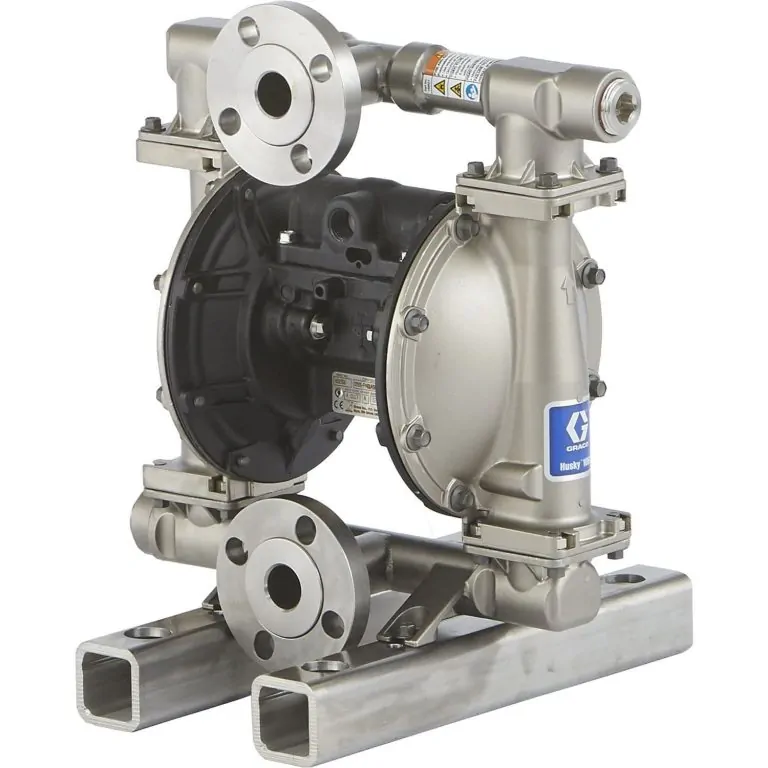
Designed to withstand critical and hostile environments, with high exposure to external agents, pneumatic diaphragm pumps can be a very efficient option for pumping salt water and chemical products. Due to their high availability and efficiency, they represent a viable and economical alternative for the rail, sea and land transport sector.
With numerous regulations and legislation in force aimed at environmental protection, it is very important to select the right equipment for this type of application, especially in the removal and treatment of contaminated water and dangerous agents during transport processes.
It is also highly efficient in ensuring proper handling of products during dehydration, chemical transfer, cleaning, oil separation processes, among others.
This type of bomba can guarantee exceptional advantages for these applications, such as:
It has a more resistant design and bolted construction, providing greater resistance to leaks when compared to other positive displacement pumps.
Pumps with ball valve and flap options, ensuring better management of solids and liquids with different viscosity grades.
Customizable options with a wide range of elastomers to achieve greater chemical compatibility according to your process needs.
How are pneumatic diaphragm pumps used in the Transport sector?
This type of pump can be applied in different ways in maritime, rail and land transport operations, as we will see below:
Loading/unloading and transfer: A pneumatic diaphragm pump It can be used for pumping chemicals, lubricants, fuel and cargo oils, and also for transferring hazardous drainage, according to the chemical compatibility of the equipment.
Dewatering: pumps can be portable or fixed depending on the application, and can be used for cleaning and removing water.
Processing: The pneumatic diaphragm pump supports critical operations on shipping equipment and vessels, such as during bilge pumping and water and oil separation.