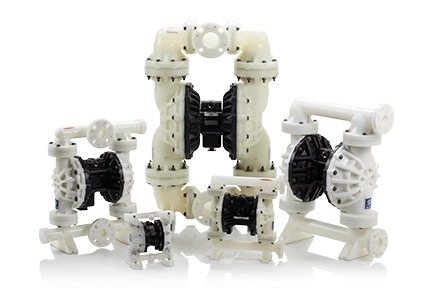
As Double diaphragm pumps air operated They are widely used due to their construction and simple and portable versatility.
The capabilities of bomba double diaphragm pneumatic valve are reflected in the fact that it can be used in all stages of the production cycle, from the unloading of raw materials from ships or tanks to the final stage of the filling line. The AODD pump offers the ability to handle shear-sensitive fluids, keep thick, viscous fluids moving, and provide leak-free operation. Other benefits include the ability to be used across a wide range of pressure and flow specifications; self-priming, low-wear operation; ability to handle corrosive and abrasive solutions; greater energy efficiency; and low overall maintenance costs.
An AODD pump uses compressed air as a source of energy. It has two chambers, each containing an alternative elastomeric diaphragm that pumps fluid. An interconnected axis allows diaphragms to move simultaneously as the compressed air is moved from one camera to another. The shuttle movement forces the liquid out of a chamber and to the discharge pipe while the other chamber is being filled with liquid.
Aodd bombs repair is a three -stage operation. First, there is the question of removing the pump from the pipe and transferring it to a proper workshop location, where there is a compressed air supply. At this stage, it is essential to identify the type of fluid with which the pump is dealing, as this can reveal if the pump model was the most appropriate.
Repairing your pneumatic diaphragm pump in four steps:
Step 1: Examine your pump
Once the pump is removed from service and before submitted to any additional handling, it is advisable to verify that there is evidence of external fluid leaks. Remember that a leak may not be where fluid spots are found; Therefore, it is essential to verify if there are drips and register where they were identified.
The next stage is to drain the pump, connect the air and start the air test. This is the most critical part of the operation, as it ensures that all problems can be identified.
The air test process implies opening the air regulator (if any), turning on the air and gradually increasing the pressure to 3-4 bar. The main problems being verified are: air leaks; liquid leaking from the exhaust; consistency of the leak; and the presence of suction pressure and discharge. This last item implies holding your hand at the entrance and exit to feel suction and unloading pressures.
Air leaks show that there may be sealing leaks, loose screws or clips. Escape fluid leakage is evidence of diaphragm failure. If not, the air valve is possibly spent or the axis o-rings are letting the air pass. Then it means that the diaphragm axis sealing and the air valve need to be verified to ensure that they are based correctly and not obstructed.

2nd Step: Disassembling the pump
If it is necessary to dismantle the pump, this should be done in a workshop or in a prepared area that allows all components to be arranged in an orderly manner. If the pump is used for hygienic applications, it is essential that this be done in a fully equipped clean room.
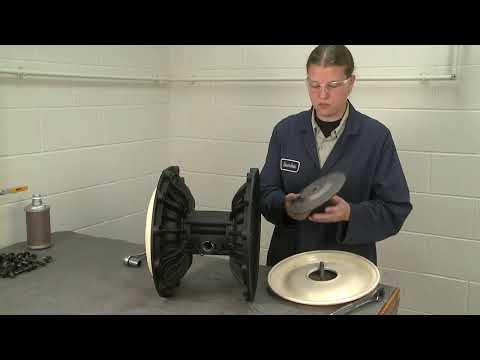
Disassemble the pump begins with the removal of sides and collectors. It is very important to mark the pieces and keep the sides different separately, as it is easier to replace the components in the same order as they have been removed.
The next step is to check the wear of the valve spheres. This will require diameter measurement and verification of the manufacturer's specifications, because valve spheres usually wear out evenly. Diaphragms should be inspected for wear and chemical attack, which can be apparent only as thin tension lines. Finally, the valve headquarters should be inspected for damage.
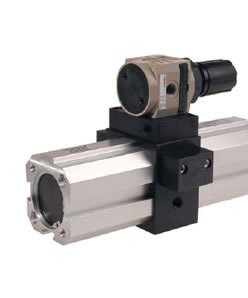
It is a good idea when using an AODD pump to adjust it to an external air valve set. This allows you to be verified more regularly, because the whole pump need not be dismantled to do this.
Step 3: Replacing defective parts
The replacement of parts which were identified as defective due to wear or damage should be done according to the manufacturer's instructions. If the axis seals are replaced, they should be a little tight to the axis, as well as the mechanical seals of the axis, if they are also replaced. More importantly, PTFE seals should be replaced because they have no “memory” and leak if they are reused. It is recommended that the two diaphragms be exchanged, as they are the weak point
Step 4: Air test after reassembly
Once the pump is reassembled, it must be subjected to an air test to confirm that there are no air leaks and the pump works evenly.
The suction vacuum can be checked by placing a hand in the entrance: you should feel enough suction and have a red ring in the palm. The process should be repeated for discharge, with a reasonable degree of pressure being felt
At the end increase the pressure up to 8 bar for 30 minutes. This will verify the integrity of pump reconstruction. Then squeeze all screws again if necessary. If the pump passes all these checks, it will be ready to be reconnected to the pipe.