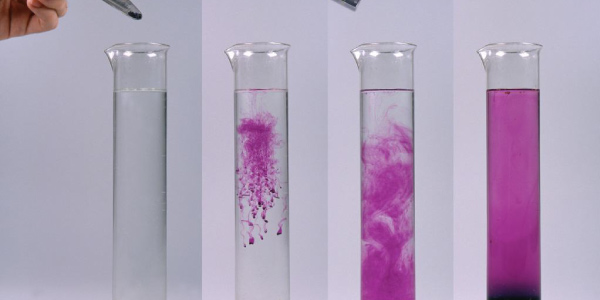
Solubility is the ability of a solute to dissolve in a solvent. The solubility of one substance in another is not unlimited, and the amount of solute you can resolve in a solvent varies greatly. The tabulated solubility values refer to maximum grams of solute in a given amount of solvent.
- Solubility depends on temperature. In general, but not without expectations, solubility increases with temperature
- smaller particles dissolve faster than larger particles
- a solid dissolves more quickly if the mixture is shaken or stirred
One saturated solution contains the maximum amount of solute in the solvent, given by solubility.
Examples of common solutions:
- tea with sugar – a solution of sugar in hot water (tea)
- seawater – a solution of salt in water
Example 1
Sodium chloride, NaCl, is the salt used for cooking. This salt has a solubility of 36 g in 100 g of water at 25°C.
What is the concentration (by weight%) of a saturated aqueous solution of NaCl at 25°C?
A saturated solution contains the maximum amount of solute in the solvent, which for NaCl is 36 grams in water at 25°C. Then, the concentration of the saturated solution is: g NaCl /g NaCl solution *100%
NaCl concentration = 36 [g]/(100 + 36)[g] * 100% = 26.5% by weight
Example 2
What will be the concentration (by weight%) if you add 34 g of NaCl to 100 g of water?
34 g of NaCl is less than solubility, which means that all of the salt will dissolve in water at 25°C.
NaCl concentration = 34 [g]/(100+34) [g] * 100% = 25.4% by weight
Example 3
What will be the concentration (by weight%) of the saline solution if you add 38 g of NaCl to 100 g of water?
38 g of NaCl is more than the solubility of NaCl in water. This means that the solution will be saturated and some of the salt will remain undissolved at 25°C. The concentration of the saturated solution is the same as in Example 1:
NaCl concentration = 36 [g]/(100 + 36)[g] * 100% = 26.5% by weight
Source: https://www.engineeringtoolbox.com/solubility-d_1283.html