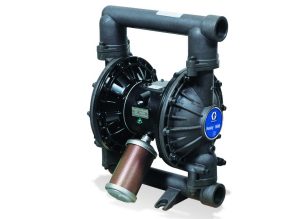
What is a bomba double diaphragm pneumatics?
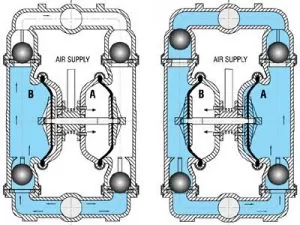
A double diaphragm pneumatic pump It is a type of positive pump. It consists of two pumping chambers that are filled and discharged alternately by the movement of diaphragms. Compressed air under pressure is fed alternately into the air chambers on the opposite sides of the diaphragms.
Pumps are generally used for liquid fluid transfer applications and can handle a wide variety of fluids, including slurries, abrasive and shear-sensitive fluids. Although they are robust, reliable and easy to maintain, they can be noisy, prone to icing and are limited to low pressure applications.
How does a pneumatic pump work?
A pneumatic pump moves fluid by the alternating back and forth movement of diaphragms fixed under a shaft. The pump's pneumatic system directs compressed air from one side to the other, moving in continuous cycles.
What are the main features and benefits of a pneumatic pump?
Pneumatic pumps are essentially leak-free. There are only fixed seals between the wetted parts and the environment, so leakage can only occur if one or both diaphragms rupture.
Pneumatic pumps are capable of handling highly viscous fluids, slurries or abrasives. Additionally, the gentle pumping action makes them ideal for shear-sensitive fluids. The four internal check valves generally use a ball (or cone)/seat or flap design. Ball valves provide a better seal and are less subject to wear than flap designs. Because flap valves are hinged, long-term use may cause fatigue at the bending point. Ball valves wear more evenly because the ball is free to rotate during operation and settle into a different position on the seat. Flap-type check valves have the advantage of being able to more easily pass large solids entrained into the pumped fluid.
What are the Main applications of pumps pneumatics?
Compressed air driven diaphragm pumps are often used for transfer, dosing or dispensing applications, but pneumatic pumps are robust equipment typically used in transfer applications. They are relatively low cost and reliable; They can run dry and pump dirty and contaminated liquids.
Below are some typical pump applications:
Mining
- Water runoff above and below ground and quarries
- Transfer of abrasive muds and mud mixtures
- Dosing reagents
- Solvent transfer for separation of minerals from ore
- Transfer of fuels to vehicles and equipment
Coatings
- Transferring, dispensing and dosing paints, inks and dyes
- Feed pump for spray guns
- Solvent painting lines
Ceramic
- Ceramic strips
- Tank transfer
- Filling molds
- Circulating ceramic paste
- Wastewater transfer
Chemical
- Load and unload tanks, containers and barrels
- Portable Utility Pump
- Chemical dosage/dosage
Electroplating and anodizing
- Refilling chemicals into metal plating and finishing tanks
- Agitation of cleaning solutions
- Liquid circulation to prevent sedimentation
- Filtration (when critical purification is required for high quality parts)
- Unloading corrosive laden solid waste
Pulp and paper
- Printing inks
- Colas
- kaolin clay
- Bulk transfer
- Resins
- Scatters
Oil and Gas
- Sedimentation Pond Transfer
- Transfer of oils and glycol
- Pressure filter
- Bulk transfer
Water/wastewater treatment
- Solid loaded material transfer
- Filter press
Always count on Duplado, your reliable supplier. Get in touch by phone (48) 3438-8484 or email loja@duplacao.com.br and speak to our experts.