Pneumatic cylinders are essential components in industrial automation systems, providing linear movement and precise control. In this guide, we will address the different types of cylinders, their characteristics and how to select the most suitable model for their applications.
What are pneumatic cylinders?
What are pneumatic cylinders?
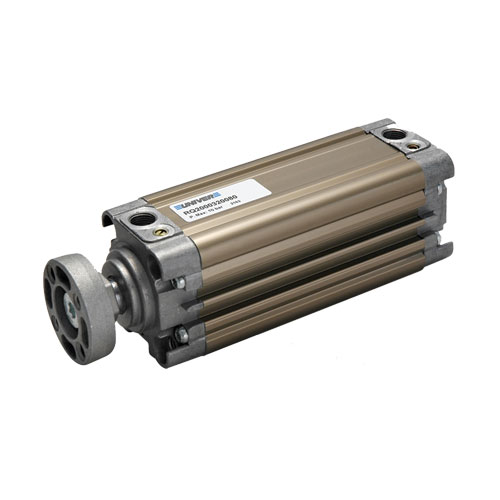
Pneumatic cylinders are devices that use compressed air to generate linear movement. They are fundamental in industrial automation systems, where accuracy and efficiency are essential. The basic functioning of a pneumatic cylinder involves the air inlet into a chamber that pushes a piston, resulting in motion.
Types of pneumatic cylinders
There are several types of pneumatic cylinders, each designed to meet specific needs. Double -action cylinders, for example, allow piston to move in both directions, while simple action cylinders use air pressure in a single direction, being returned by a spring. Other types include long course cylinders, compact cylinders and cylinders with cushioning, which offer additional movement on movement.
Pneumatic cylinder applications
Pneumatic cylinders are widely used in various industries, including automotive, pharmaceutical and food. They are used in processes such as assembly, packaging, transportation and manipulation of materials. Their ability to operate in aggressive environments and their quick response make them ideal for high efficiency applications.
Advantages of pneumatic cylinders
One of the main advantages of pneumatic cylinders is their ability to generate significant strength with a compact size. In addition, they are easy to install and maintain, and offer clean operation as they do not use lubricants. Safety is also a strong point, as in case of failure, the system can be designed to release the pressure quickly, avoiding accidents.
How to choose the ideal cylinder
To choose the ideal pneumatic cylinder, it is important to consider factors such as the necessary strength, the cylinder course and the type of assembly. In addition, the operating environment should be evaluated, such as temperature and presence of contaminants. The choice of cylinder material is also crucial as different materials offer corrosion resistance and wear. Consulting an expert can help ensure that the selection meets the specific needs of the application.
Types of pneumatic cylinders
Types of pneumatic cylinders
Pneumatic cylinders are classified into different types, each with specific characteristics that meet various applications.
Double action cylinders
These cylinders allow the piston to move in both directions, using compressed air to push the piston back and forth. They are ideal for applications that require continuous movement and precise control.
Simple action cylinders
Simple action cylinders use compressed air to move the piston in a single direction. The return of the piston is made by a spring. These cylinders are simpler and more economical, being used in applications where the return movement does not require significant strength.
Compact cylinders
Compact cylinders are designed for reduced spaces. They offer an efficient solution for applications where space is limited, maintaining good performance.
Long course cylinders
These cylinders are designed to provide a larger course, allowing longer movements. They are used in applications that require significant displacements.
Cylinder with cushion
Damping cylinders have mechanisms that reduce piston speed at the end of the course, avoiding sudden impacts. This is essential in applications that require softness and precision in movement.
Fast action cylinders
These cylinders are designed to operate at high speed, being ideal for applications that require fast cycles. They are often used in assembly lines and automated processes.
Choosing the right type of pneumatic cylinder is crucial to ensuring efficiency and effectiveness in industrial operations.
Pneumatic cylinder applications
Pneumatic cylinder applications
Pneumatic cylinders are widely used in various industries due to their efficiency and versatility.
Automotive industry
In the automotive industry, pneumatic cylinders are used in assembly lines to move parts and components. They help process automation such as engine assembly and panel installation.
Food industry
Pneumatic cylinders are essential in the food industry for packaging and product handling processes. They ensure that food is handled safely and efficiently, without contamination.
Pharmaceutical
In the pharmaceutical industry, these cylinders are used in packaging machines and dosing processes. The precision and reliability of pneumatic cylinders are essential to guarantee product quality.
Packaging Industry
Pneumatic cylinders are often used in packaging machines to open, close and seal packages. They offer fast and efficient movement, increasing the productivity of production lines.
Process automation
In addition to the specific industries, pneumatic cylinders are used in process automation systems in general. They can be found in equipment that perform tasks such as pressing, cutting and transporting materials.
Robotics
In robotics, pneumatic cylinders are used to create movements in robotic arms and other automated devices. They allow robots to perform tasks accurately and quickly.
These applications demonstrate the importance of pneumatic cylinders in various sectors, contributing to the efficiency and safety of industrial processes.
Advantages of pneumatic cylinders
Advantages of pneumatic cylinders
Pneumatic cylinders offer several advantages that make them a popular choice in industrial applications.
1. High force in compact size
Pneumatic cylinders can generate significant force in a small space. This is especially useful in environments where space is limited, allowing automation without compromising efficiency.
2. Easy installation and maintenance
These cylinders are usually easy to install, which reduces the setup time in production lines. In addition, maintenance is simple as many models do not require constant lubrication, which decreases operating costs.
3. Clean operation
Pneumatic cylinders work with compressed air, which means there is no need for oils or lubricants. This results in a cleaner and more secure work environment, especially in food and pharmaceutical industries.
4. Security
In case of failure, pneumatic cylinders can be designed to quickly release the pressure, minimizing the risk of accidents. This feature makes them a safe option for critical applications.
5. Versatility
Pneumatic cylinders can be used in a wide range of applications, from process automation to material handling. Its versatility allows them to be adapted to different industrial needs.
6. Quick response
These cylinders offer a quick response, allowing machines to operate at high speed. This is fundamental in processes that require rapid cycles and maximum efficiency.
These advantages make pneumatic cylinders an ideal choice for many industries, contributing to the efficiency and safety of operations.
How to choose the ideal cylinder
How to choose the ideal cylinder
Choosing the correct pneumatic cylinder is essential to ensure efficiency and effectiveness in industrial applications. Here are some important factors to be considered:
1.
Determine the strength that the cylinder needs to generate. This depends on the weight of the object to be moved and the specific application. The force is calculated based on air pressure and piston area.
2. Type of action
Choose from simple or double action cylinders. Dual action cylinders are more versatile as they allow movement in both directions. Simple action are simpler and more economical, but limited to a movement.
3. Cylinder Course
The course is the distance that the piston moves. It is important to choose a cylinder with a course that meets the needs of the application. A very short course can limit functionality, while a very long course can be unnecessary.
4. Assembly
Consider the type of cylinder assembly. There are different options, such as flange assembly, support or rail. The choice should be based on the available space and system configuration.
5. Operation Environment
The temperature, humidity and presence of contaminants in the operating environment should be taken into account. Cylinders made of corrosion resistant materials are ideal for aggressive environments.
6. Operation Speed
Check the operation speed required. Pneumatic cylinders can operate at different speeds, and the choice should align with process requirements.
7. Cost and Maintenance
Consider the initial cylinder cost and long -term maintenance costs. Cylinders that require less maintenance may be more economical over time.
Following these guidelines will help ensure that you choose the most suitable pneumatic cylinder for your specific needs.