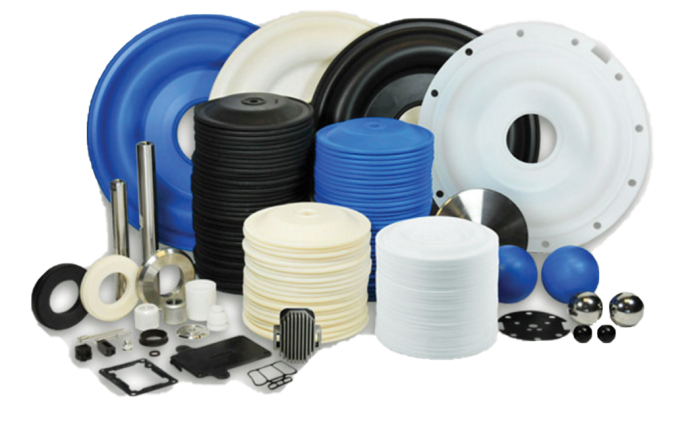
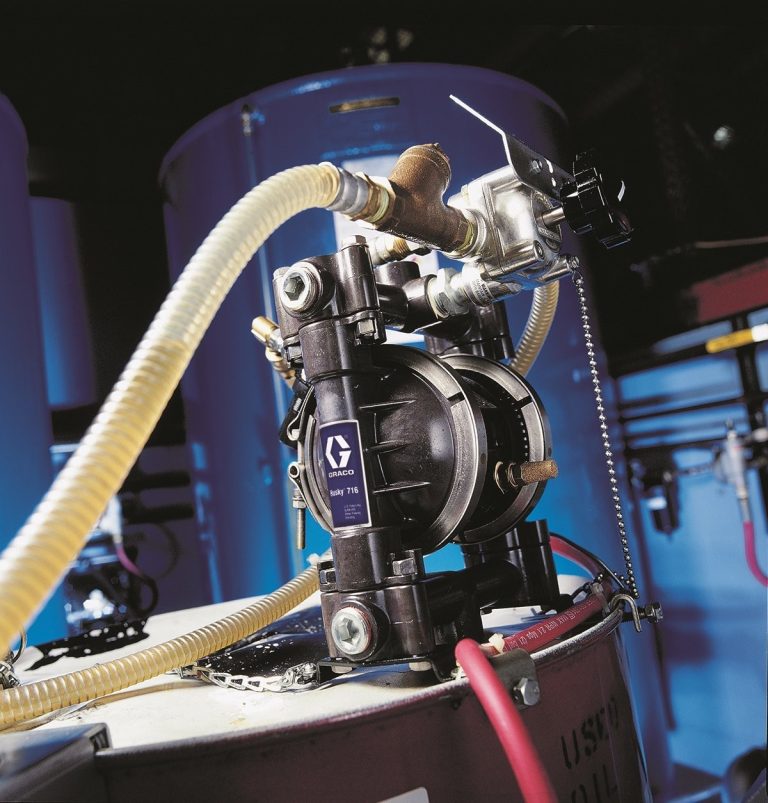
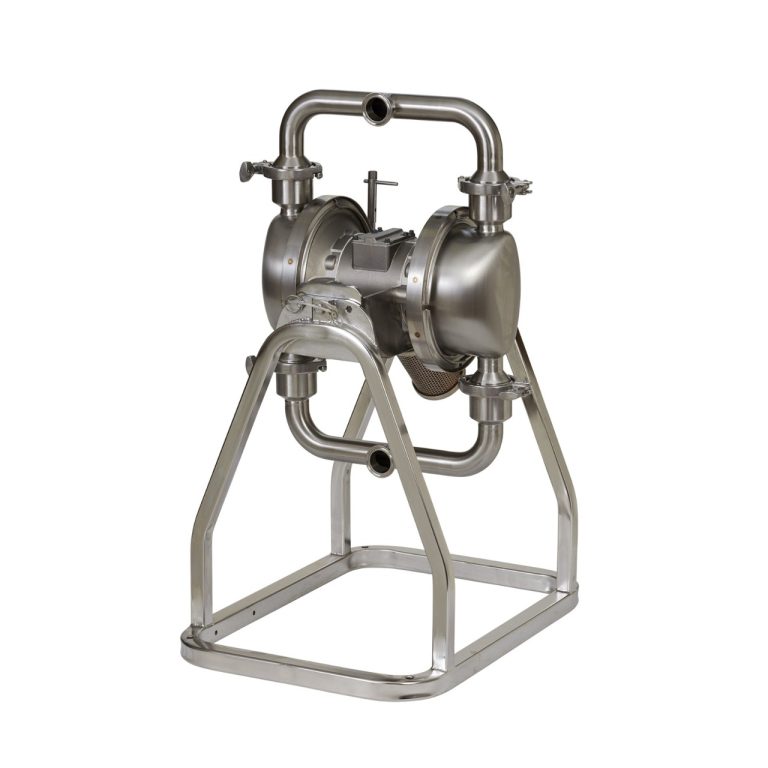
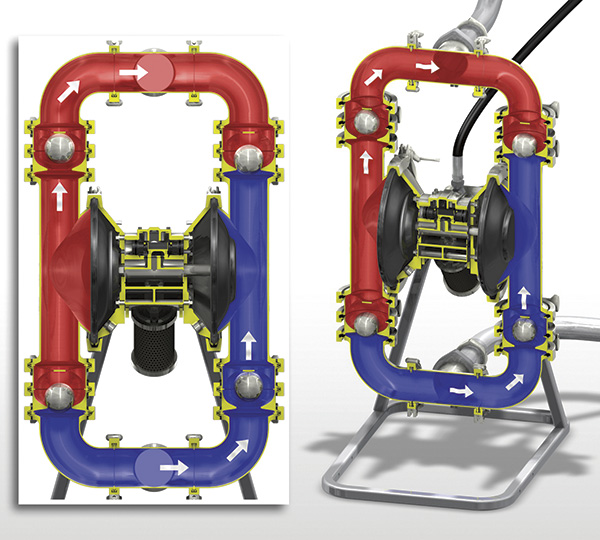
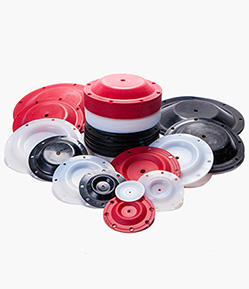
Diaphragms are fixed between the air and liquid chambers of a bomba AODD (pneumatic double diaphragm pump). Diaphragm failure will not only stop pump operation, but also result in process fluid leakage (with related spillage problems).
It is essential that the correct diaphragms are selected for reliable and safe pump operation. We will discuss further the factors to consider for diaphragm selection, available material options, and recommendations for general applications.
Factors to consider when selecting the correct diaphragm for your pump:
1. Previous experience: A good starting point is previous experience handling diaphragm materials against the pumped liquid.
2. Chemical Compatibility: Each liquid is unique and chemical compatibility is mandatory. It is also important that diaphragms are compatible with unprocessed liquids (such as cleaning agents, etc.).
Most pump manufacturers provide detailed chemical compatibility information regarding diaphragm material options. The link below gives you access to this information:
https://www.graco.com/us/en/in-plant-manufacturing/support/tools/chemical-compatibility.html
If in doubt, always consult the technical area or your trusted supplier to ensure that the diaphragms selected are compatible with the liquid being pumped.
3. Abrasive resistance: A liquid abrasive contains substances, usually minerals and inorganic materials, that are harder than the material they rub against. This abrasion will wear down and damage softer materials such as diaphragms.
There are specific diaphragms to handle these abrasive liquids.
4. Service life: How long do diaphragms work? The pump can operate approximately one hundred times in one minute. The diaphragm must flex with each cycle. Some diaphragm materials have longer lifespans than others, even under the same ideal operating conditions, meaning they can work harder without losing mechanical properties. Diaphragms will need to be replaced after the end of their useful life.
5. Operating Temperature: The operating temperature of the fluid is a very important factor in diaphragm selection. At high temperatures, some materials may melt and may not have the same resistance to fluid attack (compared to milder temperatures). At very low temperatures, diaphragm flexibility is often a problem. Each diaphragm material has a working temperature range. Obviously, service life cannot be expected when operating the pump in the extreme limits of high and low temperature.
6. Suction condition: As AODD pumps are self-priming, the application can be flooded or high suction. Always pay attention to these parameters when selecting the diaphragm.
7. Cost: Each diaphragm material option has a different cost. The total cost of purchasing the diaphragm is determined by several points such as initial purchase cost, useful life, downtime, labor costs to replace diaphragms, etc.
Selecting the correct diaphragm for application requires consideration of several factors such as temperature, abrasion, chemical compatibility, service life, suction conditions and cost. Different diaphragm materials perform differently considering these factors, so it is important to always consult a specialist. With the correct diaphragm selection, you will obtain the best performance from your pump, with reliable, efficient and economical operation.
Click here, and discover the best spare parts for pneumatic pumps.
Dupulação has almost twenty years of experience with double diaphragm pumps. Get in touch by phone (48) 3438-8484 and speak to our experts.
Notes: Vine TM is a registered trademark of the DuPont company. Santoprene TM is a registered trademark of ExxonMobil.
Source: http://madhavfluid.com/