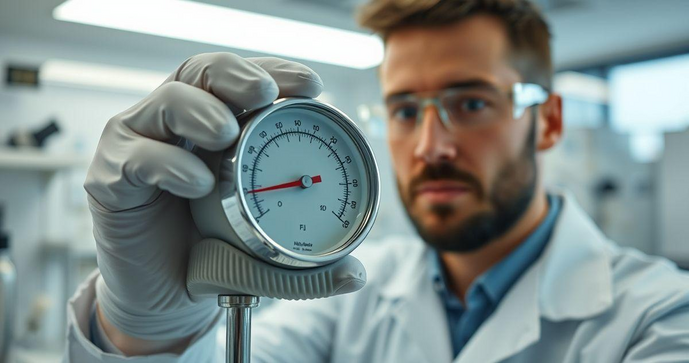
Industrial thermometers are essential for ensuring accurate measurements in various sectors, such as food and pharmaceuticals. When choosing the ideal thermometer, consider application, accuracy, durability and ease of integration with control systems to optimize process efficiency.
Os industrial thermometers types applications They are essential for controlling and monitoring processes in various industries. In this article, we will unveil the different types of thermometers available and their practical applications. Understanding the specifics of each type can help you choose the right equipment to optimize efficiency and safety in your operation.
Types of industrial thermometers
Os types of industrial thermometers They are varied and each one has specific characteristics that make them suitable for different applications. Choosing the right type is crucial to ensuring accuracy and efficiency when monitoring temperatures in industrial processes.
Mercury Thermometers
Mercury thermometers are traditional and offer high accuracy. They are used in controlled environments, but their use is declining due to environmental concerns.
Digital Thermometers
Digital thermometers are widely used due to their ease of reading and quick response. They can be found in different configurations, such as portable and fixed, and are ideal for applications that require constant monitoring.
Infrared Thermometers
Infrared thermometers allow for non-contact temperature measurement, making them perfect for moving surfaces or in hazardous environments. They are often used in the food and pharmaceutical industries.
Resistance Thermometers
Resistance thermometers, such as RTDs (Resistance Temperature Detectors), are known for their accuracy and stability in temperature measurements. They are used in industrial processes that require strict monitoring.
Applications of industrial thermometers
As applications of industrial thermometers are diverse and essential for the efficient functioning of various industries. They are used in sectors such as food, pharmaceutical, petrochemical and many others, where temperature control is crucial.
Food industry
In the food industry, thermometers are used to ensure that food is stored and processed at safe temperatures. This helps prevent contamination and ensure product quality.
Pharmaceutical
In the pharmaceutical industry, accuracy in temperature measurement is vital. Thermometers are used in drug manufacturing and storage processes, where temperature variations can affect the effectiveness of products.
Petrochemical sector
In the petrochemical sector, thermometers are used to monitor temperatures in chemical reactions and refining processes. Precision is essential to ensure the safety and efficiency of operations.
Process Automation and Control
Thermometers also play an important role in process automation and control. They are integrated into control systems that automatically adjust operating conditions based on temperature readings, improving efficiency and reducing waste.
Advantages of using industrial thermometers
As advantages of using industrial thermometers are significant and directly impact the efficiency and safety of industrial processes. Choosing the appropriate thermometer can bring benefits in several areas.
Accuracy in Measurements
Industrial thermometers are designed to offer high accuracy in temperature measurements. This is crucial in processes where small variations can affect the quality of the final product.
Durability and Resistance
These thermometers are manufactured to withstand harsh conditions such as high temperatures and corrosive environments. Its durability ensures that equipment operates reliably over time.
Ease of Integration
Industrial thermometers can be easily integrated into automation and control systems, allowing real-time monitoring. This facilitates quick and informed decision-making during production processes.
Reduction of Operating Costs
With the accuracy and reliability of industrial thermometers, companies can reduce waste and improve energy efficiency. This results in a significant decrease in operating costs over time.
How to choose the ideal industrial thermometer
Choose the ideal industrial thermometer It is a task that requires attention to several factors. The correct decision can directly impact the efficiency and safety of industrial processes.
Consider the Type of Application
The first step is to understand the specific application of the thermometer. Different industries have different needs, such as measurements in corrosive environments or extreme temperatures. Choosing a thermometer suitable for the application will ensure accurate measurements.
Accuracy and Temperature Range
Accuracy is an essential criterion. Check the temperature range that the thermometer can measure and choose a model that meets the requirements of your process. Thermometers with high accuracy are recommended for critical applications.
Ease of Installation and Maintenance
Consider the ease of installation and maintenance of the thermometer. Models that require less maintenance and are easy to install can save time and operating costs in the long run.
Integration with Control Systems
Check whether the thermometer can be integrated into existing automation systems. The ability to connect the thermometer to control systems can improve efficiency and enable real-time monitoring.
Final Thoughts on Industrial Thermometers
Industrial thermometers play a crucial role in various industries, ensuring accurate and safe measurements. When choosing the ideal thermometer, it is important to consider application, accuracy, ease of installation and integration with control systems.
With the information presented, you can make informed decisions that will improve the efficiency and safety of your processes. Don't underestimate the importance of a good industrial thermometer for the success of your operation.
FAQ – Frequently asked questions about industrial thermometers
What are the main types of industrial thermometers?
The main types include mercury, digital, infrared, and resistance thermometers, each with their specific characteristics.
How are industrial thermometers used in the food industry?
In the food industry, thermometers are used to ensure that food is stored and processed at safe temperatures, preventing contamination.
What are the advantages of using industrial thermometers?
Advantages include high precision, durability, ease of integration into control systems and reduced operating costs.
How to choose the ideal industrial thermometer?
Consider the application, required accuracy, ease of installation and maintenance, and ability to integrate with existing systems.
Do industrial thermometers need maintenance?
Yes, regular maintenance is important to ensure the accuracy and durability of thermometers, especially in demanding industrial environments.
How important is accuracy in temperature measurements?
Precision is crucial, as small temperature variations can affect the quality of the final product and the safety of industrial processes.