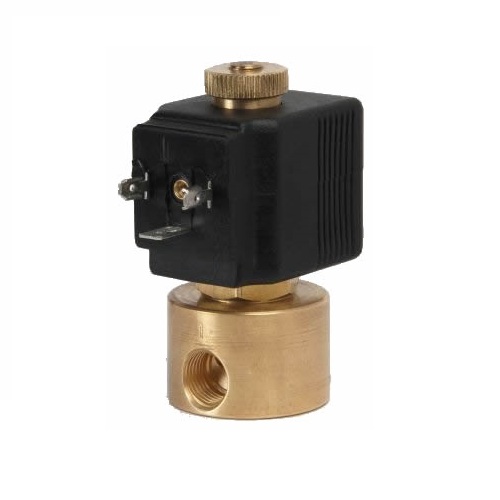
The negative pressure wave is an important phenomenon in pneumatic and hydraulic systems, characterized by pressure reduction at a certain point of the system. This concept is crucial to understanding how fluids behave under different conditions and how this can affect the efficiency and safety of industrial operations. In this article, we will explore the causes of the negative pressure wave, its implications and best practices for mitigation in automation systems.
Definition of negative pressure wave
Definition of negative pressure wave: The negative pressure wave is a phenomenon that occurs when there is an abrupt decrease of pressure in a system. This can happen in pneumatic and hydraulic systems, where fluid pressure drops below atmospheric pressure. This condition can be caused by several factors, such as rapid valve movement or interruption of air flow or liquid.
Causes of the negative pressure wave: The main causes include rapid opening or closing of valves, which causes sudden change in pressure, and the presence of pipe obstructions, which can create low pressure areas. In addition, variation in fluid temperature can also influence pressure.
Impacts on pneumatic and hydraulic systems: The negative pressure wave can cause serious problems such as cavitation, which is the formation of steam bubbles that can damage system components. It can also result in operational failures, loss of efficiency and even permanent damage to the equipment.
Practical applications of the negative pressure wave: In some applications, the negative pressure wave is used intentionally, as in aspiration systems and painting processes, where negative pressure helps to avoid contamination of the environment.
Solutions and best practices for mitigation: To avoid adverse effects of the negative pressure wave, it is important to implement relief valves, which help regulate system pressure. In addition, the use of appropriate pipes and regular maintenance of equipment is essential to ensure system efficiency and safety.
Causes of negative pressure wave
Causes of the negative pressure wave:
The negative pressure wave can be triggered by various conditions in pneumatic and hydraulic systems. One of the main causes is the Valve opening or quick closing, which causes a sudden change in fluid pressure. When a valve is closed quickly, the fluid cannot accommodate this change, resulting in a sudden drop in pressure.
Pipe obstructions They can also cause negative pressure waves. If there are blocks or restrictions, fluid flow is interrupted, creating low pressure areas. In addition, the temperature variation Fluid can influence pressure. When fluid temperature increases, its pressure tends to increase, but if there is rapid cooling, pressure drop may occur.
Another factor to consider is the system geometry. Very long pipes with sharp curves can increase flow resistance, contributing to the formation of negative pressure waves. Finally, the cavitation, which is the formation of steam bubbles in low pressure regions, can be both a cause and a consequence of the negative pressure wave, resulting in damage to the system components.
Impacts on pneumatic and hydraulic systems
Impacts on pneumatic and hydraulic systems: The negative pressure wave can have several significant impacts on pneumatic and hydraulic systems.
One of the main effects is the cavitation, which occurs when fluid pressure drops below the vapor pressure, forming steam bubbles. These bubbles can collapse violently, causing damage to internal components such as pumps and valves.
In addition, the negative pressure wave can result in Efficiency Losses. When pressure drops, system performance decreases, leading to an increase in energy consumption and a reduction in productivity.
Another important impact is the Flow instability. Negative pressure can cause fluid flow fluctuations, resulting in irregular and potentially dangerous operations. This is especially critical of applications that require precision, such as painting processes or temperature control systems.
In addition, the negative pressure wave can lead to mechanical failures, such as premature wear of parts and the need for more frequent maintenance.
Finally, operational safety can be compromised as instability and equipment damage can result in unexpected stops and operators risks.
Practical applications of the negative pressure wave
Practical applications of the negative pressure wave:
The negative pressure wave is used in various industrial applications, where its control is essential for process efficiency. One of the main applications is in Aspiration Systems, as in packaging and material transport processes. In these systems, negative pressure is created to remove contaminants and ensure product integrity.
Another example is in industrialwhere negative pressure helps to avoid contamination of the environment and ensure a uniform application of the ink.
Em filtration processes, the negative pressure wave is used to improve the efficiency in the removal of unwanted liquid and gas particles.
In addition, the negative pressure wave is applied to ventilation systems, where it is used to control air circulation indoors, ensuring air quality and workers safety.
In laboratories, negative pressure is often used in Biological Safety Cabineswhere it protects operators from pathogenic agents, maintaining a safe environment.
These applications demonstrate how the negative pressure wave is a valuable tool in various sectors, contributing to operational efficiency and safety.
Solutions and best practices for mitigation
Solutions and best practices for mitigation: To mitigate the effects of the negative pressure wave on pneumatic and hydraulic systems, it is essential to adopt some solutions and best practices.
First, the installation of relief valves It is essential. These valves help regulate pressure, avoiding abrupt falls that can cause damage.
In addition, it is important to perform regular maintenance of the equipment. Inspecting and replacing worn components can prevent failures and ensure that the system operates efficiently.
Another recommended practice is the use of adequate pipes. Pipes with correct diameter and without obstructions are fundamental to maintain a constant flow and avoid the formation of low pressure areas.
A continuous monitoring System pressure is also an effective strategy. Using pressure sensors can help identify problems before they become critical.
In addition, it is advisable to implement Training for operatorsensuring that everyone understands how to identify and react to negative pressure situations.
Finally, the data analysis Collected during operation can provide valuable insights to optimize system performance and prevent negative pressure waves.