Easy tips for solving pneumatic diaphragm pump problems - part 1: leaks
Leaks are never positive, whether in a residential installation, in our vehicle or even a bottle of water inside a backpack. When it comes to handling and transporting fluids within the industry, this problem takes on a much greater proportion, as superior performance is expected from pneumatic diaphragm pumps.
The appearance of a leak shows us that something is not working properly, and when this happens in a bomba diaphragm pneumatics, the cause of the problem must be identified as soon as possible. Depending on the fluid being pumped, a leak can cause major problems, especially when dealing with food products or dangerous fluids.
Furthermore, a Uncorrected leak can damage the pump structure, increasing the cost of repair and causing equipment unavailability. As a result, the loss suffered by the company will be much greater. For this reason, it is essential to locate these leaks and resolve them as soon as possible.
In the case of pneumatic diaphragm pumps, leaks can be identified and resolved easily, as we will see below.
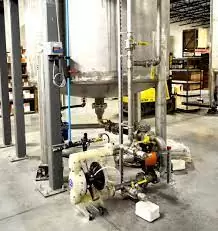

What are the main leaks?
- Loose components
The main reason for the leaking a diaphragm pump it is the presence of some loose component in its structure. This can happen during transport, expansion and contraction caused by temperature variations, among other reasons. To resolve this problem, simply retighten these components according to the manufacturer's instructions.
- Flooded suction
Another reason for leaks in these pumps is flooded suction, caused by downward pressure entering the pump. This pressure can end up generating leaks in the holes where the screws are inserted into the equipment. If this is the reason for the leak, it is possible to move the pump to keep the center line closer to the fluid level.
- Weakened diaphragm
In this case, running the pump without fluids (dry running) for a prolonged period can cause the diaphragm to become weakened, as it creates an imbalance between the wet part and the air. This type of leak can be avoided by not operating the pump dry, using a liquid level controller if necessary.
Identifying pneumatic diaphragm pump leaks
| Observation of the diaphragm | Potential problem | How to solve |
| Discoloration or cracks | Excess heat or chemical reaction | Check the chemical compatibility of elastomers and/or fluid temperatures. |
| Bubbling around the edge | Excess heat or chemical reaction | Check the chemical compatibility of elastomers and/or fluid temperatures. |
| Marks of use on one side | Too much pressure on one side of the diaphragm | Control the pressure according to technical specifications. |
| Star pattern break | Dry running | Avoid keeping the pump turned on when it is not in use. In this case, a level controller can also be used. |
| External diaphragm plate printing | Excess torque | Follow the manufacturer's torque specifications. |
- The importance of preventative maintenance
To avoid possible leaks in the pneumatic diaphragm pump, it is important to follow some maintenance steps:
- Check the physical structure of the pump before installing it;
- Adjust suction conditions to manufacturer parameters;
- Follow all torque recommendations provided by the manufacturer, as most leaks can be caused by incorrect torque settings.
Furthermore, it is also important to carry out complete replacement of components when any type of repair is carried out. For example: if one of the diaphragms has problems, it is important to replace both diaphragms. The same goes for other components present in your pneumatic suction pump, in order to guarantee the quality and functionality of your product.
Always count on the duplation, your reliable supplier for pneumatic pumps. Contact us at (48) 3438-8484 or email vendas@duplacao.com.br And talk to our experts.