The control mechanism is a fundamental part of automated systems, responsible for regulating and managing operations in various industries. In this article, we will explore the different types of control mechanisms, their functions and the importance of implementing them to ensure efficiency and precision in processes.
What is a Control Mechanism? Definition and basic concepts about control mechanisms in automated systems.
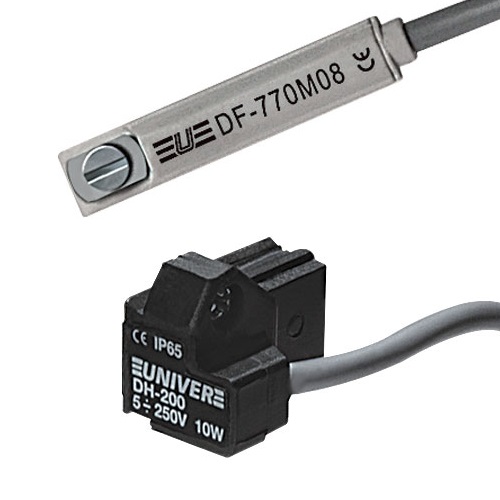
One control mechanism is a system that regulates and manages the behavior of a process or operation. It is essential in automated systems, where precision and efficiency are fundamental. These mechanisms use sensors to collect data about the state of the system and actuators to make adjustments as needed.
There are different types of control mechanisms, each with its specific characteristics and applications. THE proportional control adjusts the output based on the difference between the desired value and the current value. THE full control considers the history of errors, accumulating the difference over time to correct persistent deviations. Already the derivative control anticipates changes by adjusting the output based on the rate of change of the error.
In industry, control mechanisms are widely used in sectors such as industrial automation, where they are applied to machines and production processes. In the sector of HVAC (heating, ventilation and air conditioning), they ensure that temperature and humidity are maintained at ideal levels. In chemical processes, control mechanisms help maintain stable reaction conditions, ensuring the quality of the final product.
The implementation of control mechanisms brings several benefits. They improve the efficiency operational, as they allow systems to function optimally. Furthermore, they help reduce costs by minimizing waste and failures. Operational safety is also increased since control mechanisms can detect and correct problems before they become critical.
Types of Control Mechanisms Exploration of different types of control mechanisms, including proportional, integral and derivative control.
Os control mechanisms can be classified into different types, each with its specific characteristics and applications. Among the most common are the proportional control, o full control and the derivative control.
O proportional control It is one of the simplest and most widely used methods. It adjusts the system output based on the difference between the desired value and the current value, known as error. The greater the error, the greater the correction applied. This allows the system to respond quickly to changes, but can result in oscillations if not adjusted well.
O full control is designed to eliminate residual error that may persist in systems with proportional control. It accumulates the error over time and adjusts the output based on that sum. This means that even if the error is small, the integral control will continue to increase the output until the error is corrected. This approach is useful in systems where accuracy is critical.
On the other hand, the derivative control anticipates changes in the error, adjusting the output based on the rate of change of the error. This allows the system to react quickly to sudden changes, preventing excessive oscillations. Derivative control is often used in conjunction with the other two types to form a control system. PID (Proportional, Integral and Derivative), which combines the benefits of each approach.
These types of control mechanisms are fundamental in many applications, ensuring that systems operate efficiently and precisely. The choice of the type of control to be used depends on the specific characteristics of the process and the desired objectives.
Practical Applications in Industry Analysis of the applications of control mechanisms in sectors such as industrial automation, HVAC and chemical processes.
Os control mechanisms they have a wide range of practical applications in industry, playing a crucial role in various sectors. One of the main fields of application is industrial automation. Here, control mechanisms are used to regulate machines and production processes, ensuring that operations are carried out efficiently and accurately. For example, on an assembly line, sensors monitor the speed and position of products, while actuators adjust the machines' operation as needed.
In the sector of HVAC (heating, ventilation and air conditioning), control mechanisms are essential to maintain adequate environmental conditions. They regulate temperature and humidity in buildings by automatically adjusting heating and cooling systems. This not only improves occupant comfort, but also optimizes energy consumption, resulting in cost savings.
Also, in chemical processes, control mechanisms are used to monitor and adjust critical variables, such as pressure, temperature and flow of reagents. Precision in controlling these variables is vital to guarantee the quality of the final product and the safety of the process. For example, in a chemical reaction, a small deviation in conditions can result in unwanted products or even dangerous situations.
These applications demonstrate how control mechanisms are fundamental to the efficient and safe operation of industrial systems. They not only improve productivity, but also ensure compliance with safety and quality standards, making them indispensable in modern industrial environments.
Benefits of Implementing Control Mechanisms Discussion on how adopting control mechanisms can improve efficiency, reduce costs and increase operational safety.
The implementation of control mechanisms It brings a number of significant benefits to industrial operations. One of the main benefits is the efficiency operational. With adequate control systems, it is possible to optimize processes, reducing cycle time and increasing productivity. This means that machines and equipment can operate at their maximum capacity, resulting in greater production with fewer resources.
Furthermore, the adoption of control mechanisms helps to reduce costs. By continuously monitoring and adjusting process variables, it is possible to minimize material and energy waste. For example, in an HVAC system, precise control of temperature and humidity can lead to significant energy savings, reducing electricity bills and operating costs.
Another important aspect is the increase in operational security. Control mechanisms are designed to detect failures and anomalies in real time. This allows companies to identify problems before they become critical, preventing accidents and ensuring worker safety. In chemical processes, for example, effective control can prevent dangerous reactions, protecting both operators and the environment.
Furthermore, the implementation of control mechanisms can improve the Product Quality. With precise control of operating conditions, companies can ensure products meet rigorous quality standards, resulting in greater customer satisfaction and less rework.
In summary, the adoption of control mechanisms not only improves efficiency and reduces costs, but also increases safety and quality, making it an essential part of modern industrial operations.