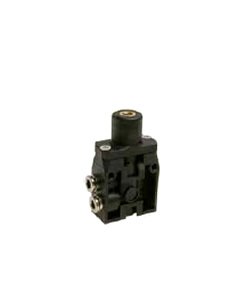
Drive logic is an essential concept in industrial automation, especially in pneumatic systems. It refers to the set of rules and conditions that determine how actuating devices, such as valves and cylinders, are actuated. Understanding drive logic allows engineers and technicians to design more efficient and safer systems, minimizing errors and maximizing productivity.
What is Drive Logic?
The trigger logic is a fundamental concept in industrial automation, especially in systems that use pneumatics. It refers to the set of rules and conditions that determine how actuating devices, such as Valves e cylinders, are activated. These devices are essential for controlling airflow and the movement of parts on a production line.
In practice, the drive logic is implemented through Programmable Logic Controllers (PLCs) or control systems that interpret input signals, such as sensors, and generate output signals for actuators. For example, when a sensor detects the presence of an object, the PLC can activate a valve to release compressed air and move a cylinder, performing a specific task.
Additionally, drive logic can be programmed to respond to different conditions, allowing the system to adapt to changes in production or equipment failures. This increases the efficiency and a security process, minimizing the risk of errors and accidents. Therefore, understanding the drive logic is crucial for engineers and technicians who work with automation, as it directly impacts the performance by reliability of industrial systems.
Drive Logic Components
The drive logic components are essential for the efficient operation of pneumatic systems. These components work together to ensure operations are carried out accurately and safely.
One of the main components is the programmable logic controller (PLC). The PLC is responsible for processing information received from sensors and making decisions based on programmed logic. It acts as the brain of the system, controlling the sequence of operations.
Another important component is the sensors. They detect specific conditions, such as the presence of objects, pressure or temperature. The sensors send this information to the PLC, which in turn decides how the actuators should respond.
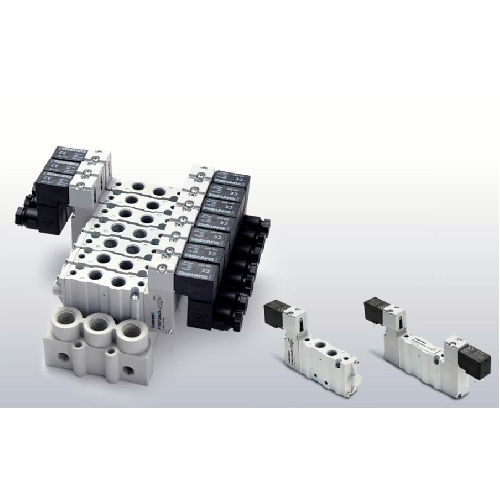
Os actuators, such as valves and cylinders, are responsible for executing the actions determined by the PLC. The valves control the flow of compressed air, while the cylinders perform linear or rotary movements.
In addition, there are security devices, such as emergency switches and relief valves, which guarantee the protection of the system and operators. These devices are crucial to preventing accidents and system failures.
Finally, the user interface allows operators to monitor and control the system. This interface can include control panels, displays and buttons, facilitating interaction with the automation system.
Practical Applications of Drive Logic
The trigger logic It has several practical applications in industrial environments, where pneumatic automation is widely used. A common example is on assembly lines, where drive logic controls the movement of pneumatic cylinders to position parts at workstations. This increases efficiency and reduces cycle time.
Another important use is in automated painting. Here, the drive logic ensures that the Valves are activated at the right time, releasing the ink in a controlled and uniform manner. This results in high-quality finishes and minimizes material waste.
Furthermore, drive logic is applied in material handling. For example, in automated warehouses, logic controls the actuators that move pallets and boxes, optimizing space and improving operational efficiency.
In processes of packaging, drive logic coordinates the operation of machines that seal, label and package products. This ensures that each step of the process occurs synchronously, increasing productivity.
Finally, drive logic is also used in control systems. security, such as machines that automatically stop when an operator approaches a risk area. This demonstrates how drive logic not only improves efficiency but also contributes to safety in the workplace.
Benefits of Implementing Trigger Logic
The implementation of the trigger logic brings several significant benefits to industrial systems. One of the main benefits is the operational efficiency. With well-defined drive logic, processes are optimized, reducing cycle time and increasing productivity. This means machines can operate continuously and with fewer stops.
Another important benefit is the error reduction. Programmed logic minimizes the possibility of human error, as operations are carried out according to pre-established conditions. This results in more consistent, high-quality production.
A security is also a crucial aspect. Systems that use drive logic may include safety devices that automatically interrupt operation in the event of failures or risky situations. This protects both operators and equipment.
In addition, the flexibility is a significant advantage. The drive logic can be easily adjusted to meet different production needs. This allows companies to quickly adapt to changes in the market or demand.
Finally, the predictive maintenance becomes more viable with the implementation of trigger logic. Sensors and monitoring systems can provide real-time data, allowing maintenance teams to identify problems before they become critical, saving time and resources.