The compression factor is a fundamental concept in pneumatic and hydraulic systems, directly influencing the efficiency and effectiveness of operations. In this article, we will explore what the compression factor is, how it is calculated and its relevance in different industrial applications.
What is the Compression Factor? – Definition and explanation of the concept of compression factor in systems.
What is the Compression Factor? The compression factor is a parameter that measures the relationship between the volume of a gas or fluid before and after a compression process.
In pneumatic systems, this factor is crucial to understanding how compressed air behaves under different operating conditions.
The compression factor is usually expressed as a ratio, where the initial volume is compared to the final volume after compression.
For example, if a volume of air of 100 liters is compressed to 25 liters, the compression factor is 4:1. This means that the air has been compressed four times.
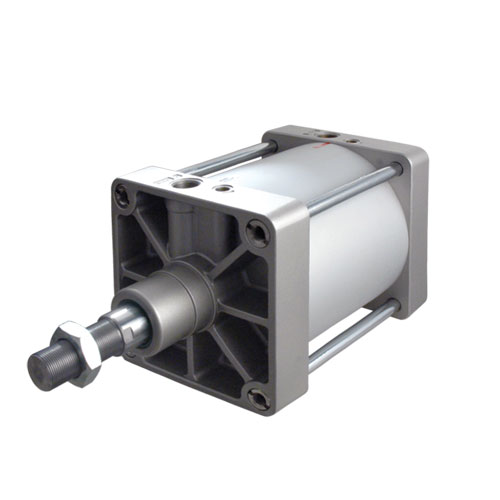
This concept is fundamental for sizing equipment, such as compressors and pneumatic cylinders, as it directly influences the efficiency of the system.
Furthermore, the compression factor can affect the temperature of the gas during the process, since compression generates heat.
Therefore, understanding the compression factor is essential to optimizing the performance and energy efficiency of pneumatic systems.
Compression Factor Calculation – Methods and formulas used to calculate the compression factor in different contexts.
Compression Factor Calculation is an essential aspect of understanding how pneumatic systems work. There are different methods and formulas that can be used to calculate this factor, depending on the context and operating conditions.
One of the most common formulas to calculate the compression factor is: Compression Factor = Initial Volume / Final Volume. For example, if a cylinder contains 200 liters of air and, after compression, this volume is reduced to 50 liters, the compression factor would be 4:1.
Furthermore, it is important to consider the temperature and air pressure during the compression process. THE equation of state of ideal gases can also be applied, which is expressed as P1 * V1 / T1 = P2 * V2 / T2, where P is the pressure, V is the volume and T is the temperature. This equation helps you understand how changing conditions affect the compression factor.
In summary, calculating the compression factor is fundamental for the sizing and efficiency of pneumatic systems, allowing engineers and technicians to optimize equipment performance.
Importance of the Compression Factor in Pneumatic Systems – How the compression factor affects the efficiency and performance of pneumatic systems.
Importance of Compression Factor in Pneumatic Systems is a crucial topic for operational efficiency.
The compression factor directly influences the energy efficiency of pneumatic systems. When the compression factor is optimized, systems are able to operate with lower energy consumption, resulting in reduction of operating costs.
Additionally, an adequate compression factor helps maintain the pressure stability within the system, which is vital for the correct functioning of pneumatic tools and equipment.
For example, in industrial applications, a very high compression factor can lead to overheating of the compressed air, which can damage components and reduce the useful life of the equipment.
Another important point is that the compression factor affects the response speed of pneumatic actuators. A well-tuned system ensures that actuators respond quickly to production demands, increasing productivity.
Therefore, understanding and controlling the compression factor is essential to ensure that pneumatic systems operate efficiently and safely.
Practical Applications of the Compression Factor – Examples of how the compression factor is used in specific industries and processes.
Practical Applications of the Compression Factor are diverse and essential in various industries.
In systems of industrial, for example, the compression factor is used to optimize the atomization of the material, ensuring uniform coverage and reducing ink waste. When compressed air is adjusted correctly, the pressure and volume allow paint to be sprayed efficiently, resulting in high-quality finishes.
In the food industry, the compression factor is applied in vacuum packaging systems. Here, air compression inside the packaging helps preserve food, increasing its durability and maintaining quality.
Another example is in process automation, where the compression factor is crucial for the operation of pneumatic actuators. These actuators depend on specific pressures to operate correctly, and a suitable compression factor ensures they respond quickly to production demands.
Furthermore, in pneumatic conveying systems, the compression factor is used to move bulk materials, such as grains or powders, through pipes. Transport efficiency directly depends on controlling the compression factor, which ensures that materials are transported effectively and with minimal loss.