Vacuum pumps are essential equipment in various industrial applications, from packaging to fluid handling. With the ability to create a low-pressure environment, they play a crucial role in improving operational efficiency and product quality. In this article, we will explore the main features, types and applications of vacuum pumps, as well as how to choose the best option for your needs.
What is a Vacuum Pump? – Definition and basic functioning of vacuum pumps.
A vacuum pump is a device designed to remove air and other gases from an enclosed space, creating a low-pressure environment. Basic operation involves reduction of internal pressure relative to atmospheric pressure, allowing air to be evacuated. There are different mechanisms that can be used, such as compression, a absorption your a desorption of gases.
Vacuum pumps are essential in several industrial applications, as they guarantee the process efficiency and the quality of the products. They can be used in packaging systems, where the removal of air helps preserve food, or in manufacturing processes, where the creation of a vacuum is necessary to handle sensitive materials.
There are several types of vacuum pumps, each with specific characteristics that make them suitable for different applications. Main categories include:
- Dynamic Vacuum Pumps: They use a rotor to move air and create a vacuum. Examples include vane pumps and turbines.
- Positive Vacuum Pumps: They work through a mechanism that captures air and expels it. Diaphragm and piston pumps are common examples.
- Diffusion Vacuum Pumps: They use oil vapor to create a deep vacuum and are often used in laboratories and chemical industries.
- Absorption Vacuum Pumps: They use materials that absorb gases, making them ideal for applications that require the removal of vapors.
Each type of pump has its advantages and disadvantages, and the choice must be based on the specific needs of the process.
As vacuum pumps have a wide range of applications in different industrial sectors. In the sector of packaging, they are used to create an air-free environment, extending the shelf life of food products. Node pharmaceutical sector, pumps are essential for the production of medicines, where contamination must be avoided.
Also, in automation, vacuum pumps are used in material handling systems, allowing the movement of parts efficiently and safely. They are also used in vacuum in laboratories, where air removal is crucial for experiments and analysis.
Choose the ideal vacuum pump involves considering several factors. First, it is important to assess the specific application for which the pump will be used. This includes understanding the pressure required, the volume of air to be evacuated and the nature of the gases to be removed.
Another aspect to consider is the maintenance. Some pumps require more care than others, and this can impact operating costs. Furthermore, the energy efficiency is an important factor, as more efficient pumps can result in long-term savings.
Finally, it is recommended to consult experts or suppliers for guidance on the best options available on the market, ensuring that the pump chosen meets all the needs of your process.
Types of Vacuum Pumps – Exploration of the different types of vacuum pumps available on the market and their applications.
There are several types of vacuum pumps, each designed to meet specific needs in different industries. Choosing the appropriate type is essential to ensure the efficiency of the process. Below we present the main types:
- Dynamic Vacuum Pumps: These pumps use an impeller to move air and create a vacuum. Examples include the PALLATE PUMPS, which are popular for their versatility and efficiency in industrial applications, and the turbine pumps, which are used in processes that require deep vacuum.
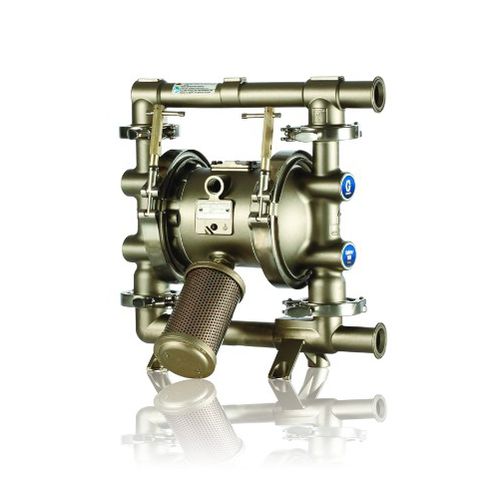
- Positive Vacuum Pumps: They work through a mechanism that captures air and expels it. To the diaphragm pumps are known for their ability to operate in clean environments, making them ideal for laboratory applications. Already the piston pumps They are robust and used in applications that require high pressure.
- Diffusion Vacuum Pumps: They use oil vapor to create a deep vacuum. They are often used in chemical industries and laboratories, where air removal is crucial for carrying out experiments and manufacturing processes.
- Absorption Vacuum Pumps: These pumps use materials that absorb gases, making them ideal for applications that require the removal of vapors. They are commonly used in dehydration processes and solvent recovery systems.
Each type of pump has unique characteristics that influence its efficiency, maintenance and cost. The choice must be made based on the specific requirements of the process in which it will be used.
Applications of Vacuum Pumps in Industry – Analysis of the main applications of vacuum pumps in sectors such as packaging, pharmaceuticals and automation.
As vacuum pumps play a crucial role in diverse industries, providing efficient solutions for a variety of applications. Below, we explore some of the main applications:
- Packaging Sector: In the packaging industry, vacuum pumps are used to remove air from packages, creating an oxygen-free environment. This helps preserve the freshness of food and increase the shelf life of products. The technique of vacuum in packaging It is widely used in food, electronics and pharmaceuticals.
- Pharmaceutical industry: Vacuum pumps are essential in the manufacture of medicines. They are used in processes such as vacuum filtration, which allows the separation of solids from liquids, and in drying of products, where air removal is necessary to prevent degradation of active compounds.
- Automation and Material Handling: In automated systems, vacuum pumps are used to move parts and components. They allow the safe handling of delicate materials, such as glass and electronics, avoiding damage during transport. Furthermore, they are used in vacuum for fixing of parts in machining machines.
- Laboratories and Research: In laboratory settings, vacuum pumps are used to create controlled conditions during experiments. They are essential in processes of vacuum distillation, where the reduction in pressure allows the evaporation of liquids at lower temperatures, preserving the integrity of the substances.
These applications demonstrate the versatility of vacuum pumps and their importance in ensuring the efficiency and quality of industrial processes.
How to Choose the Ideal Vacuum Pump – Tips and considerations for selecting the most suitable vacuum pump for your specific needs.
Choose the ideal vacuum pump It is a task that requires attention to several factors. First, it is essential to understand the specific application for which the pump will be used. This includes assessing the pressure required, the volume of air to be evacuated and the nature of the gases to be removed.
One of the main aspects to consider is the pump type. There are different types, such as dynamic, positive, diffusion and absorption pumps. Each of them has characteristics that make them more suitable for certain applications. For example, if you need a deep vacuum, a diffusion pump may be the best choice.
Another important factor is the maintenance. Some pumps require more care than others, and this can impact operating costs. It is recommended to check the serviceability and availability of spare parts.
A energy efficiency must also be considered. More efficient pumps can result in long-term savings, especially in operations that require continuous operation. Also, check the noise level of the pump, as this can be a relevant factor in work environments.
Finally, it is advisable to consult experts or suppliers for guidance on the best options available on the market. This will ensure that the pump you choose meets all your process needs, providing efficiency and reliability.