Valve actuators play a crucial role in the automation of industrial processes, allowing precise control of fluid flow. In this article, we will explore the characteristics, applications and advantages of valve actuators, highlighting their importance in operational efficiency.
What is a valve actuator? - Definition and basic operation of valve actuators.
A valve actuator It is a device that controls the opening and closing of valves in automation systems. It converts a control signal, which can be electric, pneumatic or hydraulic, in mechanical motion.
This movement is responsible for regulating the flow of fluids such as liquids and gases in pipes. Valve actuators They are essential in industrial processes as they guarantee accuracy and efficiency in operations control.
Basic operation of an actuator involves receiving a control signal, which activates an internal mechanism. This mechanism can be an electric motor, a pneumatic cylinder or a hydraulic system, depending on the type of actuator.
When activated, the actuator moves the valve, allowing or blocking the flow of fluid. This action is crucial to maintaining safety and efficiency in industrial systems, avoiding leaks and ensuring that processes occur within the desired parameters.
Valve actuators - exploration of different types of actuators, such as pneumatic and electrical.
Valve actuators can be classified into different types, the most common being the pneumatic actuators e electric actuators.
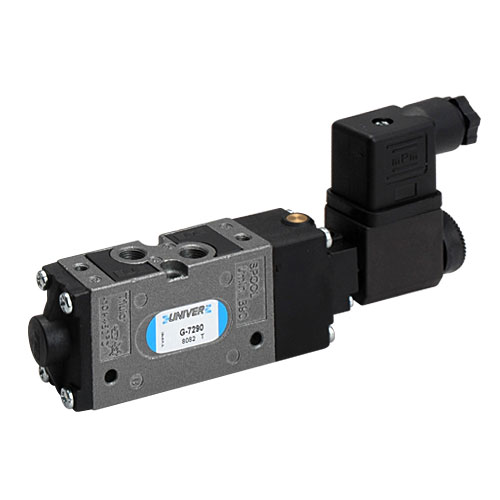
Pneumatic actuators They use compressed air to generate movement. They are known for their speed and efficiency in applications that require frequent operating cycles. The operation of a pneumatic actuator surrounds the air inlet into a cylinder that pushes a piston, resulting in the opening or closing of the valve. These actuators are ideal for environments where safety and speed are essential.
On the other hand, os electric actuators use electricity to operate. They are equipped with engines that rotate an axis, allowing valve movement. Electric actuators are preferred in applications that require precise control and can be easily integrated into automation systems. In addition, they offer the advantage of not depending on a compressed air source, which may be a limitation on some facilities.
Both types of actuators They have their advantages and disadvantages, and the choice between them depends on the specific needs of each industrial application.
Applications of valve actuators in industry - analysis of the main applications of valve actuators in various industrial sectors.
Valve actuators They are widely used in various industrial sectors due to their ability to control fluids efficiently and accurately.
In the chemical sector, for example, actuators are essential to regulate the passage of reagents into reactors, ensuring that the reactions occur in the ideal conditions.
In the oil and gas sector, they are used to control valves in pipelines and pipelines, ensuring safety and efficiency in substance transportation.
In the food industry, valve actuators help maintain product quality by controlling the flow of ingredients and avoiding contamination.
Furthermore, in HVAC systems (heating, ventilation and air conditioning), actuators regulate temperature and moisture, contributing to comfort and energy efficiency.
Actors are also used in water treatment processes, where they control the addition of chemicals and the distribution of treated water.
These applications demonstrate the versatility and importance of valve actuators In industrial automation, providing greater control and efficiency in critical processes.
Advantages of using valve actuators - benefits that valve actuators bring to process automation and efficiency.
Valve actuators They offer several advantages that are essential for industrial automation and process efficiency. One of the main advantages is the Precision in flow control. With the ability to open and close valves quickly and accurately, actuators ensure that fluids are regulated as needed, avoiding waste and improving the quality of the final product.
Furthermore, a automation provided by actuators It reduces the need for manual intervention, which minimizes human errors and increases operational safety.
Another important advantage is the energy efficiency. Modern actuators are designed to consume less energy, contributing to the reduction of operating costs.
Actors also offer greater reliabilitybecause they are built to support adverse conditions such as high pressures and temperatures, ensuring consistent performance over time.
Finally, the integration of actuators in automation systems allows a Remote Monitoring and Control, facilitating process management and decision making in real time. These advantages make valve actuators a strategic choice for companies that seek to optimize their operations and increase market competitiveness.