Industrial valves are essential for the efficient control of fluids in various sectors, such as chemical, food and beverage, and oil and gas. Choosing the ideal valve must consider compatibility with fluids, pressure, temperature and materials, ensuring safety and efficiency in operations.
Fluid Compatible Industrial Valves play a crucial role in the efficient operation of industrial systems. In a world where innovation is constant, understanding how these valves work and their applications can make all the difference in the success of your project. In this post, we will explore the types of industrial valves, the importance of compatibility with fluids, their main applications and tips for choosing the ideal valve for your needs.
Types of industrial valves
As types of industrial valves They are varied and each one has specific characteristics that meet different needs in fluid control systems. Knowing these options is essential to guarantee the efficiency and safety of industrial operations.
Ball Valves
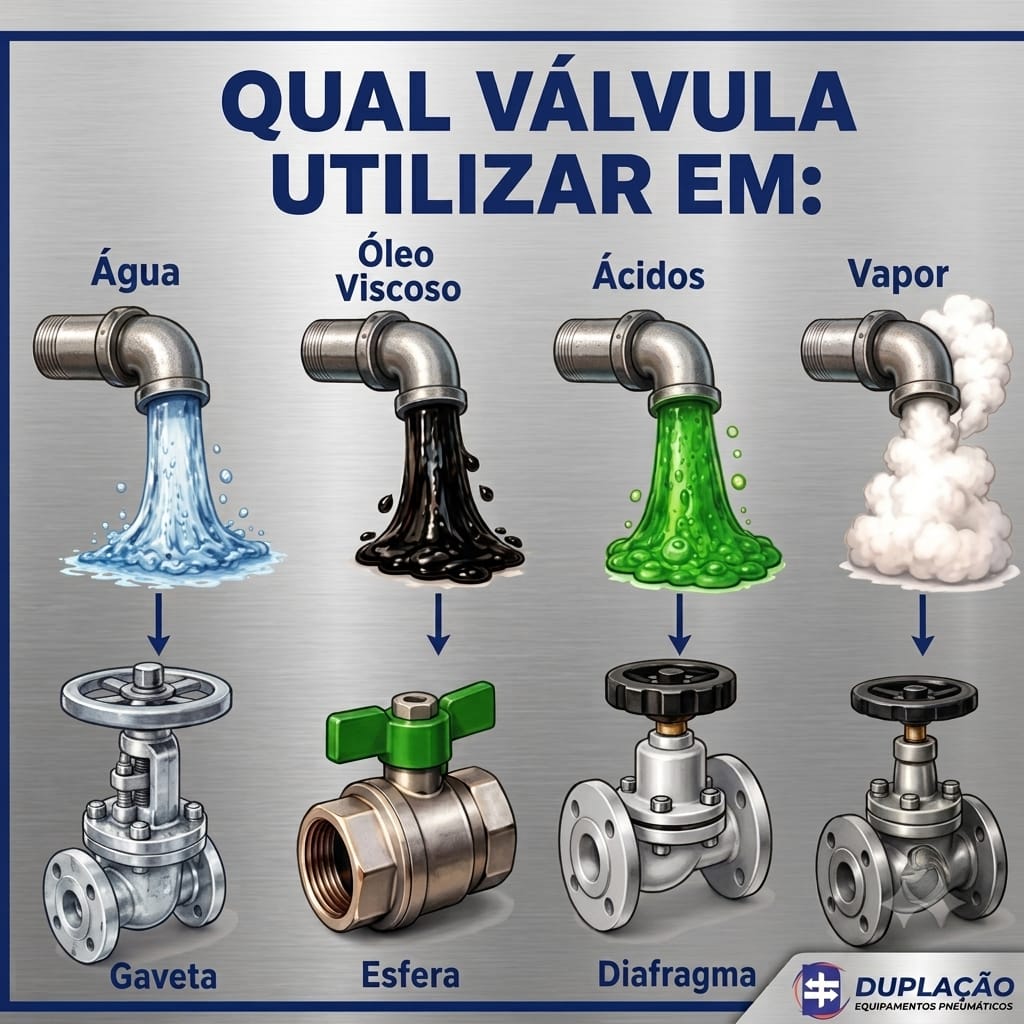
Ball valves are known for their ability to open and close quickly. They are ideal for applications that require precise flow control and are often used in water and gas systems.
Gate Valves
Gate valves are designed to allow or block the flow of fluids. They are best suited for applications where the valve is completely open or closed, as they are not ideal for partial flow control.
Check Valves
These valves are used to prevent backflow of fluids into systems. They are essential in applications where flow direction must be maintained, such as pumps and piping systems.
Control Valves
Control valves are used to regulate the flow and pressure of fluids in a system. They are often integrated into automated systems and are essential for maintaining desired operating conditions.
Importance of fluid compatibility
A fluid compatibility is a crucial factor in the selection of industrial valves. Choosing valves that are compatible with the fluids they will control ensures the safety and efficiency of the system. When valves are not compatible, leaks, corrosion and equipment failure can occur.
Prevent Equipment Damage
Incompatible valves can cause significant damage to the system, leading to high maintenance and repair costs. Correct selection ensures that valve materials resist corrosion and wear, extending equipment life.
Operational security
Safety is a priority in industrial environments. Valves that are not compatible with fluids can result in accidents such as explosions or toxic leaks. Therefore, it is essential to perform a detailed compatibility analysis before installation.
System Efficiency
Compatible valves help maintain system efficiency by ensuring fluid flow is unobstructed. This results in optimized performance and reduced energy consumption.
Rules and Regulations
Additionally, compliance with industrial standards and regulations is critical. Choosing valves compatible with specific fluids not only meets legal requirements, but also promotes safe and responsible operating practices.
Applications of industrial valves
As industrial valve applications are diverse and essential in various sectors. They play a crucial role in controlling the flow of fluids in industrial systems, ensuring efficiency and safety in operations.
Chemical industry
In the chemical sector, valves are used to control the passage of reagents and chemical products. Compatibility with corrosive fluids is essential to prevent damage and ensure worker safety.
Food and Beverage Industry
Valves are essential in the food and beverage industry to ensure products are processed in a safe and hygienic manner. They help control the flow of ingredients and maintain the quality of the final product.
Oil and Gas Sector
In the oil and gas sector, valves are used to regulate the flow of oil, natural gas and other fluids. They are designed to withstand high pressures and temperatures, ensuring safe operations.
Water treatment
Valves also play an important role in water treatment, controlling flow in treatment plants and distribution systems. They help ensure that treated water reaches consumers safely.
How to choose the ideal valve
Choose the ideal valve for its industrial application is a task that requires attention to several factors. Correct selection can directly impact system efficiency and security.
Identify the Type of Fluid
The first step is to identify the type of fluid that will be controlled. This includes considering the viscosity, temperature and corrosivity of the fluid. Different valves are designed to handle specific fluid characteristics.
Consider Pressure and Temperature
It is essential to check the pressure and temperature specifications of the valve. The valve chosen must be able to withstand the operating conditions of the system without compromising its integrity.
Check Material Compatibility
The compatibility of the valve materials with the fluid is crucial. Unsuitable materials can lead to corrosion and failure. Make sure the valve is made of materials that resist the fluid in question.
Analyze the Action Method
Valves can be manual or automatic. Consider the method of operation that best suits your application. Automatic valves are ideal for systems that require remote control and precision.
Final Considerations on Industrial Valves
Industrial valves play a fundamental role in several sectors, ensuring efficient fluid control. Choosing the ideal valve must take into account factors such as type of fluid, pressure, temperature and material compatibility.
By understanding applications and the importance of compatibility, you can optimize your system performance and increase operational security. Remember that correct valve selection not only improves efficiency but also prevents future problems.
Investing time in choosing the right valves is essential for the success of any industrial operation.
FAQ – Frequently asked questions about industrial valves
What are the most common types of industrial valves?
The most common types include ball valves, gate valves, check valves, and control valves.
How does fluid compatibility affect valve choice?
Fluid compatibility is crucial to prevent corrosion and failures, ensuring system safety and efficiency.
What factors should I consider when choosing a valve?
Consider fluid type, pressure, temperature and material compatibility when choosing the ideal valve.
In which sectors are industrial valves most used?
Industrial valves are widely used in sectors such as chemical, food and beverage, oil and gas, and water treatment.
How important is the maintenance of industrial valves?
Regular valve maintenance is essential to ensure proper functioning and extend the life of the equipment.
How can I ensure safety when using industrial valves?
To ensure safety, choose valves compatible with the fluids, follow installation standards and carry out periodic maintenance.