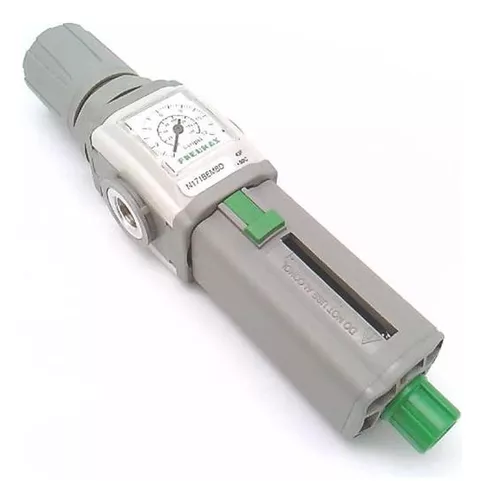
The pneumatic pressure regulator filter is a device used to filter and regulate air pressure on pneumatic systems. It performs two main functions:
Air Filtering: The filter removes particles of dirt, humidity and other contaminants present in compressed air. This is essential to protect sensitive pneumatic components such as valves, cylinders and pneumatic tools, against damage and malfunction caused by air impurities.
Pressure Regulation: The pressure regulator adjusts the compressed air pressure to a desired and constant level. This ensures that pneumatic devices work consistently and within the specified pressure limits, regardless of variations in air source pressure.
Here is a basic summary of how a pneumatic pressure regulatory filter works:
1) Compressed air inlet: Compressed air, which may contain impurities and pressure variations, enters the regulatory filter through an input connection.
2) Filtering: Air passes through a filter element within the filter, which retains particles of dirt, water and other impurities in the air. This helps keep compressed air clean and free of harmful contaminants.
3) Pressure regulation: After passing through the filter element, the air enters the device pressure regulation section. Here, an adjustable internal mechanism controls the amount of pressure that is allowed to pass through the regulatory filter. This is usually done by adjusting an adjustment screw or a button on the device.
4) Regulated air output: The compressed air now clean and regulated in pressure comes out of the regulatory filter through an output connection. This air is then directed to pneumatic devices, where it can be used to perform mechanical work, process control, or other pneumatic operations.
In short, a pneumatic pressure regulator filter plays a key role in maintaining compressed air quality and ensuring a consistent and controlled air supply for pneumatic systems. This helps prolong the life of pneumatic components and improve the efficiency and reliability of pneumatic operations.
Meet more in the video below: