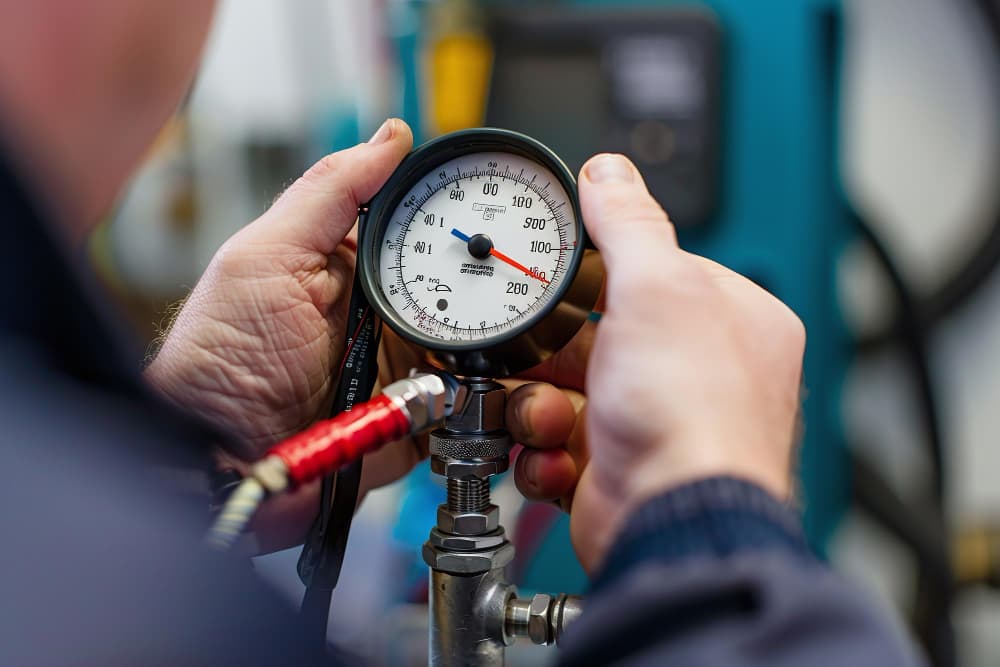
Calibrating pressure gauges is essential to ensure accurate and safe measurements in various applications. Following proper procedures, using the correct equipment and avoiding common errors are essential for effective calibration.
Calibrating a pressure gauge correctly is essential to ensure accurate measurements in different contexts, from laboratories to industries. Often, a small calibration error can result in large deviations in the results. In this article, we will share the importance of this practice and how you can easily calibrate pressure gauges to increase efficiency and safety in your processes.
Importance of calibrating pressure gauges
Calibrating pressure gauges is an essential process to ensure the accuracy of pressure measurements in various sectors, such as industrial, laboratory and automotive. An uncalibrated pressure gauge can lead to inaccurate readings, resulting in operational failures and safety risks.
Why is calibration important?
Calibrating pressure gauges regularly ensures that the instruments are within accuracy specifications. This is crucial for product quality, process safety and compliance with regulatory standards. Calibration helps to avoid errors that can be costly, both in financial and safety terms.
Impact on operations
A correctly calibrated pressure gauge contributes to operational efficiency. For example, in manufacturing processes, accurate pressure readings ensure machines operate within optimal parameters, preventing unexpected downtime and wasted materials.
Rules and regulations
In addition to operational benefits, pressure gauge calibration is often required by quality and safety standards. Organizations such as ISO establish guidelines that companies must follow to ensure the accuracy and reliability of measuring instruments.
Therefore, calibration should not be viewed simply as a maintenance task, but as a fundamental part of the quality and safety strategy of any operation that depends on accurate measurements.
Equipment needed to calibrate pressure gauges
To calibrate pressure gauges correctly, it is essential to have the appropriate equipment. Choosing the right instruments ensures accurate and reliable measurements. Here are the main equipment needed:
1. Reference pressure gauge
A reference pressure gauge is essential for calibration. It must have a higher precision than the pressure gauge being calibrated. This ensures that measurements are comparable and that the calibrated pressure gauge meets the required standards.
2. Pressure pump
One bomba pressure gauge is used to generate the required pressure during the calibration process. There are different types of pumps, such as manual and electric, which can be chosen according to the needs of the procedure.
3. Connectors and hoses
Connectors and hoses are essential to connect the pressure gauge to be calibrated to the pressure pump and reference pressure gauge. It is important to ensure that there are no leaks at the connections as this may affect the accuracy of the measurements.
4. Additional Test Equipment
Depending on the type of pressure gauge and the application, it may be necessary to use additional equipment, such as electronic calibrators or temperature measuring devices. This equipment helps ensure that all variables that may affect the measurement are controlled.
With the correct equipment, pressure gauge calibration becomes a more efficient and reliable process, contributing to measurement accuracy and operational safety.
Step by step to calibrate pressure gauges correctly
Calibrating pressure gauges correctly is a process that requires attention and precision. Below we present a step by step To ensure calibration is performed effectively:
1. Equipment preparation
Before starting calibration, check that all necessary equipment is available and in good condition. This includes the reference pressure gauge, pressure pump, connectors and hoses. Make sure the work environment is clean and free from interference.
2. Connection of pressure gauges
Connect the pressure gauge to be calibrated to the reference pressure gauge using the appropriate hoses and connectors. Check that all connections are tight and leak-free, as this may affect the accuracy of measurements.
3. Applying pressure
Use the pressure pump to apply a known pressure to the system. The pressure should be increased gradually, allowing both gauges to stabilize their readings. Note the readings of both pressure gauges at different pressure levels.
4. Comparison of readings
Compare the readings of the reference pressure gauge with those of the pressure gauge to be calibrated. If there are discrepancies, adjust the pressure gauge as necessary. This may involve using a zero adjustment or a correction factor, depending on the type of pressure gauge.
5. Repeating the process
Repeat the process at different pressure points to ensure the pressure gauge is calibrated throughout its operating range. This helps identify any nonlinearities in the measurements.
6. Documentation
After calibration, document all results and adjustments made. This is important to maintain a calibration record and ensure compliance with standards and regulations.
By following these steps, you will ensure that your pressure gauges are calibrated correctly, contributing to accurate and safe measurements.
Common errors when calibrating pressure gauges
Gauge calibration is a critical process, but can be affected by several errors. Get to know the common mistakes in calibration can help ensure accurate and reliable measurements. Here are some of the most frequent errors:
1. Lack of adequate preparation
A common mistake is not properly preparing the equipment before calibration. This includes not checking that pressure gauges are clean, that hoses are in good condition, and that all necessary instruments are available.
2. Inadequate connections
Connecting pressure gauges improperly can result in leaks or inaccurate readings. It is crucial to ensure that all connections are tight and that there are no air or fluid leaks during the calibration process.
3. Not following the correct procedure
Ignoring the step-by-step procedure for calibration can lead to significant errors. Each step, from applying pressure to comparing readings, must be followed rigorously to ensure accuracy.
4. Not documenting results
Failure to document calibration results can cause problems in the future. It is important to record all measurements and adjustments made for reference and to ensure compliance with standards and regulations.
5. Disregarding temperature
Temperature can affect pressure gauge readings. Failure to take temperature variations into account during calibration can result in inaccurate measurements. Whenever possible, calibrations should be performed under controlled conditions.
Avoiding these common errors is essential to ensure that pressure gauge calibration is carried out effectively, contributing to measurement accuracy and safety.
Importance of calibrating pressure gauges
Calibrating pressure gauges correctly is essential to ensure accurate and safe measurements in various applications. Regular calibration helps prevent errors that can result in operational failures and safety risks.
Following the appropriate steps, using the correct equipment and being aware of common errors are fundamental practices for effective calibration. With this, you ensure that your pressure gauges work reliably, contributing to the efficiency and quality of processes.
Therefore, do not underestimate the importance of pressure gauge calibration in your operations. Investing time and resources in this process is a crucial step to ensuring the accuracy and safety of your measurements.
FAQ – Frequently asked questions about pressure gauge calibration
Why is pressure gauge calibration important?
Calibrating pressure gauges is crucial to ensure accurate measurements, avoiding errors that can lead to operational failures and safety risks.
How often should I calibrate my pressure gauges?
Calibration frequency depends on usage and regulatory standards, but it is recommended to perform calibration at least once a year or whenever inaccuracy is suspected.
What equipment is needed to calibrate pressure gauges?
Required equipment includes a reference pressure gauge, a pressure pump, connectors and suitable hoses.
What are common errors when calibrating pressure gauges?
Common mistakes include lack of preparation, improper connections, not following the correct procedure, and disregarding temperature during calibration.
How can I ensure the calibration is done correctly?
Follow a step-by-step procedure, use the correct equipment, and document all results to ensure accuracy and compliance.
What to do if the pressure gauge is not calibrated correctly?
If the pressure gauge is not calibrated correctly, adjust it as necessary and repeat the calibration process to ensure measurements are accurate.