The choice between a pneumatic diaphragm pump and a bomba centrifuge depends on your specific needs. Diaphragm pumps are ideal for viscous fluids and high pressure applications, while centrifugal pumps are more efficient for low viscosity liquids and large volumes.
Choosing between a **pneumatic diaphragm pump** and a **centrifugal pump** can be challenging, especially when it comes to meeting the specific demands of your project. Both have unique characteristics, but which one best suits your needs? In this article, we will discuss the differences between these types of pumps, their advantages and when each should be used, helping you make the best choice.
Differences between diaphragm pump and centrifugal pump
As diaphragm pumps e centrifugal bombs They are widely used in various industrial applications, but they have different characteristics that make them suitable for different situations.
Principle of operation
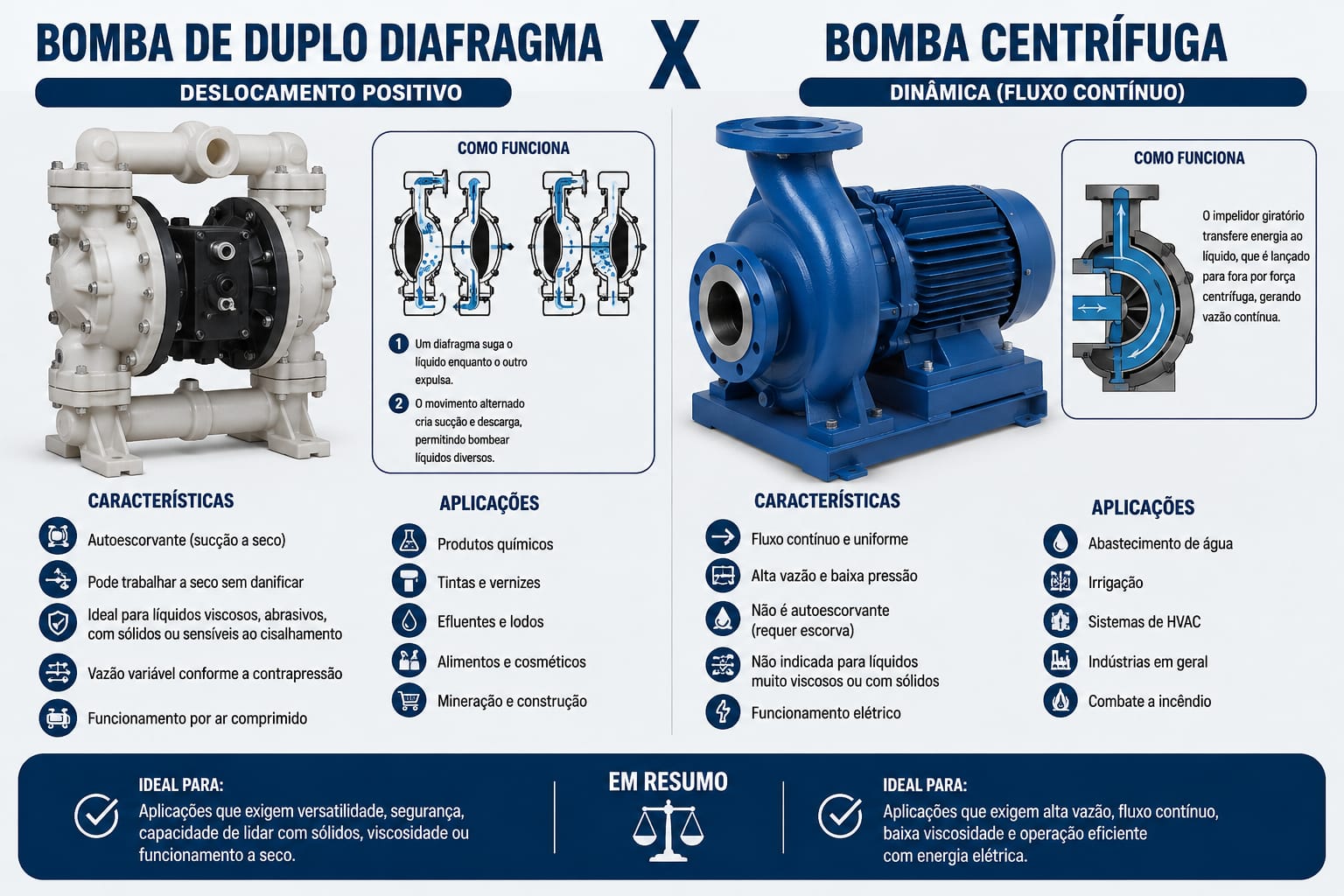
The diaphragm pump uses a flexible diaphragm that moves back and forth, creating a pumping action. This allows it to handle high viscosity fluids and suspended solids. On the other hand, the centrifugal pump uses the centrifugal force generated by a rotor to move the fluid, being more efficient for low viscosity liquids.
Common applications
Diaphragm pumps are ideal for applications that require handling corrosive or abrasive fluids, such as in chemical and food industries. Centrifugal pumps are often used in irrigation systems, water supply and cooling processes, where efficiency and speed are essential.
Maintenance and Durability
Diaphragm pumps tend to require less maintenance as they do not have moving parts that wear out quickly. On the other hand, centrifugal pumps may require regular maintenance to ensure proper functioning of the impeller and mechanical seal.
Energy efficiency
In terms of energy efficiency, centrifugal pumps generally consume less energy to pump large volumes of liquid, while diaphragm pumps can be more efficient in applications that require higher pressures.
Advantages of the pneumatic diaphragm pump
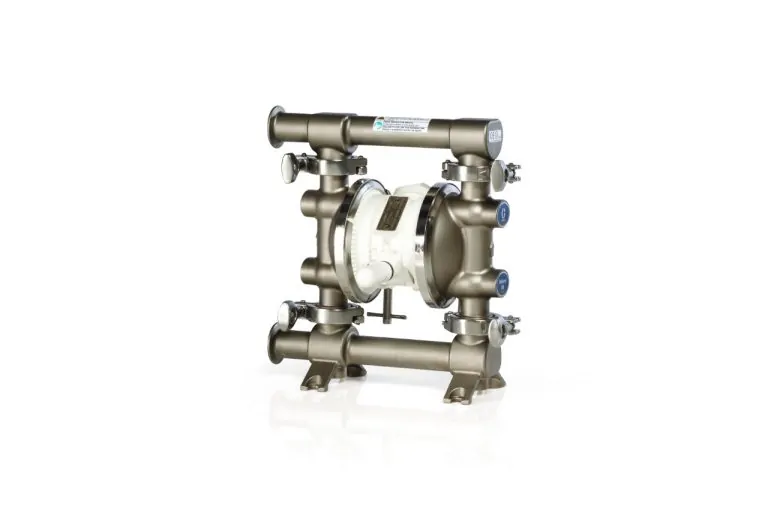
A pneumatic diaphragm pump offers several advantages that make it a popular choice in various industries. One of its main features is its ability to deal with viscous fluids and suspended solids, which makes it ideal for applications in sectors such as chemicals and food.
Versatility
These pumps are extremely versatile and can be used in a wide range of applications, from transporting chemicals to dosing liquids in manufacturing processes. Its ability to operate in different pressure and temperature conditions further increases its usefulness.
Low maintenance
Pneumatic diaphragm pumps require less maintenance compared to other types of pumps as they have fewer moving parts. This results in less downtime and reduced maintenance costs, allowing businesses to operate more efficiently.
Security
These pumps are designed to operate safely, minimizing the risk of leaks and product contamination. This is especially important in industries where product safety and quality are crucial.
Energy efficiency
Pneumatic diaphragm pumps are known for their energy efficiency as they can operate with compressed air, reducing energy consumption compared to electric pumps. This not only helps save operational costs, but also contributes to more sustainable practices.
When to use the centrifugal pump?
A centrifugal pump It is an ideal choice for a variety of applications where efficiency and speed are essential. It is designed to move low viscosity liquids and is widely used in various industries.
Applications in Irrigation Systems
One of the main uses of the centrifugal pump is in agricultural irrigation systems. Its ability to pump large volumes of water quickly makes it perfect for maintaining healthy and productive crops.
Water supply
Centrifugal pumps are frequently used in water supply systems, both in urban and rural areas. They guarantee the efficient distribution of drinking water, meeting the needs of the population.
Cooling Processes
In industries that require cooling, such as food and beverage, centrifugal pumps are essential. They help maintain the appropriate temperature in production processes, ensuring the quality of the final product.
Liquid Transfer in General
In addition to specific applications, centrifugal pumps are widely used to transfer liquids in industrial processes, such as in refineries and chemical plants. Its efficiency in moving liquids quickly is a huge benefit for production.
Efficiency comparison between pumps
A efficiency of pumps is a crucial factor when choosing between a pneumatic diaphragm pump and a centrifugal pump. Both have their advantages, but efficiency may vary depending on the application and the type of fluid to be pumped.
Energy efficiency
Centrifugal pumps generally offer greater energy efficiency in applications involving low viscosity liquids. They are designed to move large volumes of liquid quickly, making them ideal for irrigation and water supply systems.
Pressure and Viscosity
On the other hand, pneumatic diaphragm pumps are more efficient in applications that require higher pressures and the handling of viscous fluids or those with suspended solids. This makes them the preferred choice in chemical and food industries.
Performance in Variable Conditions
Diaphragm pumps also excel in variable conditions where fluid viscosity can change. They maintain consistent performance, while centrifugal pumps can lose efficiency if the fluid is not within its ideal specifications.
Operating Costs
In terms of operating costs, centrifugal pumps can be more economical in high-volume applications, while diaphragm pumps may have a higher initial cost but offer maintenance savings and long-term durability.
Which pump to choose for your needs?
When deciding between a pneumatic diaphragm pump and a centrifugal pump, it is important to consider your specific needs. Both pumps have unique features that make them suitable for different applications.
Diaphragm pumps are ideal for viscous fluids and applications that require high pressure, while centrifugal pumps are more efficient for low viscosity liquids and large volumes.
Understanding the advantages and disadvantages of each type of pump will help you make the best choice for your operation. Evaluate your needs and choose the pump that best suits your project.
FAQ – Frequently asked questions about pneumatic and centrifugal pumps
What are the main differences between a pneumatic diaphragm pump and a centrifugal pump?
The pneumatic diaphragm pump uses a diaphragm to pump fluids, making it ideal for viscous liquids and solids. The centrifugal pump uses centrifugal force, being more efficient for low viscosity liquids.
When should I use a pneumatic diaphragm pump?
The pneumatic diaphragm pump is recommended for applications that require high pressure and the handling of corrosive or viscous fluids.
What are the advantages of using a centrifugal pump?
Centrifugal pumps are efficient at moving large volumes of liquids quickly and are ideal for irrigation and water supply systems.
Which pump is most economical in terms of maintenance?
Pneumatic diaphragm pumps tend to require less maintenance due to their simple construction and fewer moving parts.
How is pump efficiency measured?
The efficiency of pumps is measured by the amount of energy they consume in relation to the volume of liquid they can pump, considering factors such as viscosity and pressure.
Can I use a centrifugal pump for viscous liquids?
Although it is possible, centrifugal pumps are not ideal for viscous liquids as they can lose efficiency. For these cases, a diaphragm pump is more suitable.