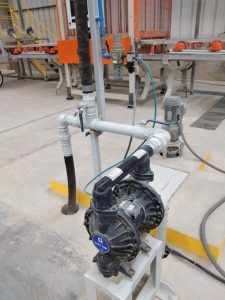
Pneumatic diaphragm pumps are extremely reliable and robust, able to meet a wide range of applications within the Industry. However, like any equipment, it can also present some problems.
To help you, we have separated some of the main incidents that can harm the functioning of your bomba and how to resolve them.
Correct air inlet size
For the pump to be able to deliver its full functionality, the compressed air intake must be compatible with the performance of this pump. The pump manual provides essential information to ensure the pump performs as expected, including the proper size of the air line.
Presence of ice restrictions on the muffler
Due to its high-speed operation, the pneumatic diaphragm pump can emit loud noises in your environment. For this reason, manufacturers recommend installing a silencer add-on.
The speed that the compressed air reaches when it enters the air valve and passes through the silencer can cause the temperature to drop considerably. For this reason, it is important to periodically check the presence of ice at the muffler outlet. This ice formation can harm the pump, causing it to operate irregularly. To avoid this problem, you can follow some guidelines:
Reduce pump air pressure;
Use a larger pump for lower speeds;
Use an exhaust pipe to eliminate air in a remote location;
Use an air line heater to ensure a higher temperature;
Use a line filter and collector to remove condensation.
Leaks
If a leak is detected in your pneumatic diaphragm pump, it is necessary to check whether the torque used is that recommended by the pump manufacturer. It is natural for certain materials to expand and relax over time, making it necessary to inspect the seal in order to make improvements.
Check that the piping is adequate
Just as the air outlet must be compatible with the size of the pump, it is also necessary to check that the piping is appropriately sized. These components must be compatible with the size of the pump and the type of fluid being pumped. It is also important to use more flexible piping to prevent leaks as pump vibration increases.
Reduce pump speed
One of the main advantages of the pneumatic diaphragm pump is its self-priming capacity. If the air pressure received by the pump is too high, the pump will not be able to remove the fluid efficiently. Reducing pump speed helps reduce inlet pressure and promote superior performance from Your pump.
Eliminate blockages
Some blockages present in your pump's fluid line can affect its performance and impair its operation. Inspecting certain items will help identify possible restrictions and ensure more efficient processes. To do this, search for:
Clogging in the line;
Excess hose;
Valves closed.
DOUBLE DIAPHRAGM PNEUMATIC PUMPS – HUSKY 1590 – GRACO