Actuator displacement is a fundamental concept in industrial automation, especially in pneumatic and hydraulic systems. In this article, we will explore what actuator displacement is, how it works and its main applications in industry.
What is Actuator Displacement?
O actuator displacement refers to the movement that an actuator makes to perform a specific action in an automated system. This movement can be linear or rotary, depending on the type of actuator used. Actuators are devices that convert energy, usually electrical, pneumatic or hydraulic, into mechanical movement.
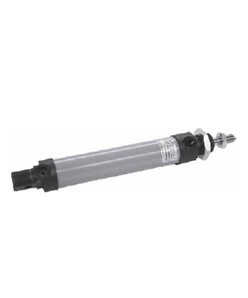
In pneumatic systems, displacement is generated by compressed air pressure acting on a diaphragm or piston inside the actuator. When air is introduced, it pushes the piston, causing displacement. This process is fundamental for the functioning of machines and equipment in various industries.
Actuators can be classified into different types such as linear actuators, which move in a straight line, and rotary actuators, which perform circular movements. The type of actuator chosen depends on the specific application and system needs.
Furthermore, actuator displacement is controlled by valves and automation systems, which allow the speed and precision of movement to be adjusted. This is crucial in industrial processes where precision is essential for the quality of the final product.
How Does Actuator Displacement Work?
O actuator displacement works by converting energy into mechanical movement. In pneumatic systems, this energy is usually supplied by compressed air. When air is introduced into the actuator, it exerts pressure on a piston or diaphragm, resulting in a movement.
The process starts with the activating a valve, which controls the compressed air intake. This valve can be operated manually or automatically, depending on the automation system. As soon as the valve is opened, air enters the actuator, pushing the piston forward or backward, depending on the system configuration.
The displacement can be adjusted through air pressure and valve activation time. The greater the pressure, the greater the piston displacement. Furthermore, the speed of movement can be controlled using regulation valves, which allow a slower or faster air flow.
Actuators can also be equipped with sensors that monitor the position of the piston. These sensors send information to the control system, allowing real-time adjustments and ensuring displacement precision. This combination of components makes the system highly efficient and reliable in industrial applications.
Actuator Displacement Applications in Industry
O actuator displacement It has several applications in industry, being essential for process automation. One of the main sectors that uses actuators is manufacture, where they are employed to control machines and equipment. For example, pneumatic actuators are often used on assembly lines to move parts and components quickly and accurately.
Another important application is in packaging industry. Actuators are used to open and close lids, adjust the position of bottles and even to seal products. This automation increases efficiency and reduces production time, resulting in greater productivity.
Furthermore, actuator displacement is widely used in process control systems, such as in refineries and chemical plants. Here, actuators control valves that regulate the flow of liquids and gases, ensuring that processes occur within the desired parameters. This is crucial for the safety and quality of the final product.
Na automotive industry, actuators are used in steering control systems, brakes, and even adjustable seats. The precise displacement of these actuators contributes to the safety and comfort of vehicles. Finally, in systems climatization, actuators regulate the opening and closing of shutters and ducts, optimizing energy consumption and improving environmental comfort.
Advantages of Using Pneumatic Actuators
Os pneumatic actuators offer several advantages that make them a popular choice in industrial automation systems. One of the main advantages is the speed of response. Pneumatic actuators can achieve high movement speeds, allowing industrial processes to be carried out more efficiently.
Another significant advantage is the ease of maintenance. Pneumatic actuators have fewer moving parts compared to electric actuators, which reduces wear and tear and the need for frequent maintenance. Additionally, most pneumatic components are designed to be easily replaceable, minimizing downtime.
Pneumatic actuators are also known for their robustness and reliability. They can operate in harsh environments, such as those with high temperatures or the presence of humidity, without compromising their performance. This makes them ideal for applications in industries such as food and pharmaceuticals, where hygiene and durability are essential.
Furthermore, pneumatic actuators are safer compared to other technologies. Because they use compressed air, there is no risk of fire or explosion, which is a concern in industrial environments. This feature increases the safety of operators and the work environment.
Finally, the flexibility of pneumatic actuators allows them to be easily integrated into existing automation systems. They can be controlled by valves and control systems, allowing quick and precise adjustments to operations. This results in greater efficiency and productivity in production lines.