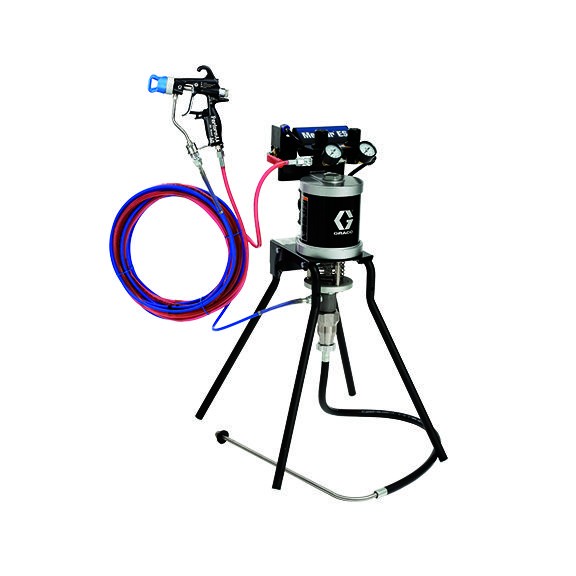
Piston pumps are essential equipment in various industries, offering high efficiency and versatility in fluid handling. In this article, we will explore the features, applications and benefits of piston pumps, as well as tips for selecting the most suitable model.
1. What is a Piston Pump?
A piston pump is a mechanical device used to move fluids, such as liquids and gases, through a pressure system. This type of pump operates based on the principle of positive displacement, where a piston moves inside a cylinder, creating pressure that forces fluid out of the pump outlet.
The operation of the piston pump is quite efficient, as it allows precise control of the flow and pressure of the fluid. The piston, when activated, moves back and forth, creating a vacuum that sucks the fluid into the cylinder during the intake phase. Then, in the compression phase, the piston pushes the fluid out, generating the pressure necessary for transport.
Piston pumps are widely used in various industrial applications due to their ability to handle fluids of different viscosities and characteristics. They are designed to operate in harsh conditions, making them ideal for demanding industrial environments.
Furthermore, piston pumps can be found in different configurations such as single piston pumps, double piston pumps and high pressure piston pumps, each suitable for specific applications. The choice of the type of piston pump depends on the needs of the process and the characteristics of the fluid to be pumped.
2. Advantages of Piston Pumps
As piston pumps offer several advantages that make them a popular choice in industrial applications. One of the main advantages is the efficiency in fluid handling. These pumps are capable of generating high pressure, which allows the transport of fluids over long distances and in systems that require constant pressure.
Another significant advantage is the versatility. Piston pumps can handle a wide range of fluids, including viscous liquids, corrosive liquids, and even suspended solids. This makes them suitable for sectors such as chemicals, pharmaceuticals and food.
A durability of piston pumps is also a strong point. They are designed to withstand severe operating conditions, which results in extended service life and reduced maintenance requirements. This translates into long-term cost savings for companies.
Furthermore, piston pumps offer precise control of flow and pressure. This is crucial in industrial processes where precision is essential to guarantee the quality of the final product. Fine-tuning settings allows operators to adapt the pump to the specific needs of each application.
Finally, piston pumps are easy to install and operate. With a relatively simple design, installation can be carried out quickly, and operation does not require advanced technical skills, facilitating personnel training.
3. Piston Pump Applications
As piston pumps They are widely used in various industries due to their efficiency and versatility. One of the main applications is in chemical industry, where they are used to pump corrosive and viscous chemicals. These pumps ensure that fluids are transported safely and efficiently, minimizing the risk of leaks.
Na food industry, piston pumps are used to handle ingredients such as oils, syrups and other liquids. The ability to handle fluids of different viscosities makes these pumps ideal for processes that require precision and tight control.
Another sector that benefits from piston pumps is pharmaceutical sector. Here, they are used to pump solutions and suspensions in drug manufacturing processes. Dosing precision is crucial, and piston pumps offer this capability, ensuring the quality of the final product.
As piston pumps are also common in industrial, where they are used to apply paints and coatings. The pressure generated by the pump allows for a uniform and controlled application, resulting in high quality finishes.
Furthermore, these pumps are used in Hydraulic systems and in equipment automation, where the precise movement of fluids is essential for the systems to function properly. Their ability to operate at high pressure and with different types of fluids makes them a reliable choice in many industrial applications.
4. How to Choose the Ideal Piston Pump
Choose the ideal piston pump For its application involves considering several important factors.
The first aspect to be evaluated is the flow necessary. Flow rate is the amount of fluid that the pump must move per unit of time. It is essential to calculate the correct flow rate to ensure the system works efficiently.
Another crucial factor is the operating pressure. Piston pumps are designed to operate at different pressure levels. It is important to choose a pump that can withstand the maximum pressure required by the application, thus ensuring the safety and efficiency of the system.
A Fluid Viscosity must also be considered. More viscous fluids require pumps with specific characteristics to ensure adequate performance. Check the manufacturer's specifications to ensure that the pump you choose is compatible with the type of fluid that will be handled.
In addition, the materiality of the pump is an important aspect. Depending on the fluid being pumped, it may be necessary to choose materials that resist corrosion or are compatible with chemicals. Pumps made from stainless steel, for example, are ideal for applications in harsh environments.
Finally, consider ease of maintenance of the pump. Pumps that allow easy access to internal components facilitate maintenance and parts replacement, reducing system downtime. Check whether the manufacturer offers technical support and replacement parts to ensure continuity of operations.