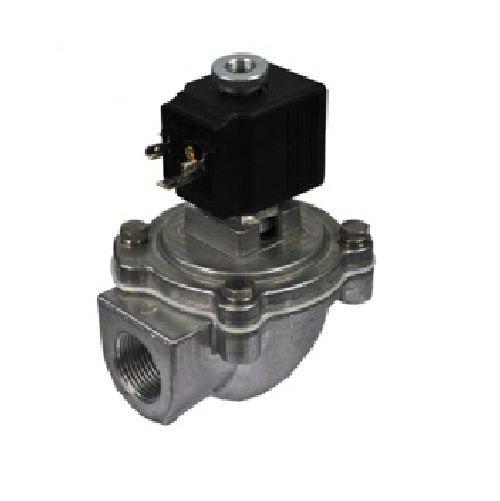
The vacuum wave is a physical phenomenon that occurs in environments where atmospheric pressure is significantly reduced. This concept is fundamental in several industrial applications, from automation to fluid handling. In this article, we will explore the characteristics of the vacuum wave, its practical applications, and the importance of this phenomenon in modern technology.
What is Vacuum Wave? – Definition and characteristics of the vacuum wave.
A vacuum wave is a physical phenomenon that occurs in environments where the pressure is lower than standard atmospheric pressure. This phenomenon is characterized by the propagation of waves in a medium where the density of air or other gas is extremely low. In simple terms, the vacuum wave represents a pressure variation that moves through a space devoid of matter.
One of the main characteristics of the vacuum wave is its ability to transmit energy without the need for a material medium. This means that, in a vacuum environment, waves can propagate more efficiently, as there is no resistance from air or other gases. This property is fundamental in several technological applications, such as in the vacuum painting and in systems pneumatic automation.
Additionally, the vacuum wave can be observed in natural phenomena, such as explosions or events that create rapid decompression of air. THE propagation speed These waves are influenced by the pressure and temperature of the environment, and in vacuum conditions, this speed can be significantly higher.
In summary, the vacuum wave is an essential concept for understanding how air pressure and density affect wave propagation, and its characteristics are fundamental for application in advanced technologies.
Vacuum Wave Applications in Industry – How the vacuum wave is used in industrial processes.
A vacuum wave It has several applications in industry, being an essential tool in processes that require the manipulation of fluids and gases. One of the main uses is in vacuum painting, where reduced pressure allows for uniform and efficient application of paints and coatings. This results in high-quality finishes, with less material waste.
Another important field is vacuum packaging, where removing air from packaging helps preserve food and products, increasing their durability. The vacuum wave is used to create a controlled environment that inhibits the growth of microorganisms, ensuring food safety.
Na industrial automation, the vacuum wave is used in transport and parts handling systems. Pneumatic equipment uses negative pressure to move objects efficiently, reducing effort and increasing productivity on assembly lines.
Furthermore, the vacuum wave is applied in filtration and separation, where negative pressure facilitates the removal of impurities from liquids and gases. This is especially useful in chemical and pharmaceutical industries, where product purity is crucial.
These applications demonstrate how the vacuum wave is a versatile and indispensable technology in various sectors, contributing to the efficiency and quality of industrial processes.
Advantages of Using the Vacuum Wave – Benefits and efficiency provided by the vacuum wave.
The use of vacuum wave brings different advantages that positively impact the efficiency of industrial processes. One of the main advantages is the cost reduction. By using the vacuum wave, companies can minimize material waste, especially in manufacturing processes. painting and packaging, where precise application of products is essential.
Furthermore, the vacuum wave provides a better quality control. In vacuum environments, the presence of contaminants is drastically reduced, which results in final products of greater purity and quality. This is especially important in industries such as pharmaceuticals and food, where product safety is crucial.
A energy efficiency is also a significant advantage. Systems that use the vacuum wave generally require less energy to operate, as the movement of fluids and gases in a low-pressure environment is more efficient. This not only reduces operating costs, but also contributes to more sustainable practices.
Another benefit is the versatility of the vacuum wave in different applications. From transporting parts on assembly lines to liquid filtration, the vacuum wave adapts to diverse industrial needs, becoming a flexible and effective solution.
Finally, the vacuum wave allows the technological innovation. With the advancement of vacuum technologies, new applications are being developed, further expanding the possibilities of use in different sectors. This positions companies that adopt this technology ahead of the competition.
Future of Vacuum Wave in Technology – Trends and innovations related to vacuum wave.
O vacuum wave future in technology is promising, with several Trends and Innovations emerging in different sectors. One of the main trends is the advancement in industrial automation. Systems that use the vacuum wave are becoming more sophisticated, allowing more precise and efficient control of production processes. This results in greater productivity and reduced errors.
Another significant innovation is the development of more efficient vacuum equipment. New technologies are being created to optimize energy consumption and improve the performance of vacuum systems. This not only reduces operational costs, but also contributes to more sustainable practices in industries.
A integration with digital technologies is also on the rise. The use of sensors and IoT (Internet of Things) in vacuum systems allows real-time monitoring, enabling automatic adjustments and predictive maintenance. This increases systems reliability and minimizes downtime.
Furthermore, research into new materials for the construction of vacuum equipment is advancing. Lighter and stronger materials are being developed, which could lead to more compact and efficient systems. This is especially relevant in applications where space is limited.
Finally, the vacuum wave is expanding into new areas, such as biotechnology and a nanotechnology. The ability to manipulate materials in vacuum environments opens up new possibilities for innovations in research and development, allowing the creation of products with unique characteristics.